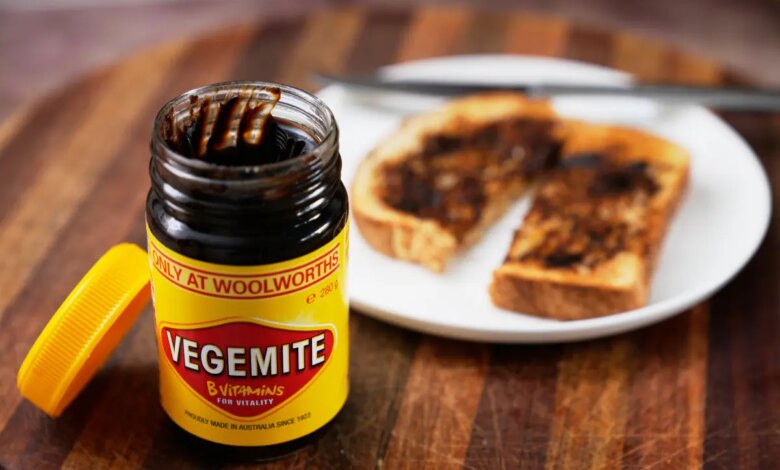
A Victorian prisoner serving a life sentence for murder has lost a unique legal challenge after arguing that a ban on Vegemite in state correctional facilities violated his human right to practice his culture as an Australian. Andre McKechnie, 55, took his case to the Supreme Court of Victoria, asserting that being denied the iconic, salty yeast-based spread left him feeling “deprived, sad and disconnected” from his heritage.
In a 47-page judgment delivered Monday, Justice Claire Harris dismissed the challenge, ruling that while the ban did technically limit McKechnie’s cultural rights under the state’s Charter of Human Rights and Responsibilities Act, the restriction was a proportionate response to prison security concerns. Authorities argued that the spread—a byproduct of the beer-brewing process—poses a risk because it can be used to manufacture illicit alcohol and potentially interfere with the effectiveness of narcotics-detection dogs.
McKechnie, who is currently held at the maximum-security Barwon Prison west of Melbourne, represented himself via video link during the proceedings. He argued that the refusal to allow Vegemite denied him the right to “enjoy his culture as an Australian in the community with other persons of Australian background.” To support his claim, he cited the cultural ubiquity of the spread, noting its mention in the 1980s hit song “Down Under” by Men at Work and the Australian Olympic Committee’s successful effort to overturn a Chinese import ban on the product ahead of the 2008 Beijing Games.
State prison officials testified that Vegemite has been prohibited across Victoria’s 12 prisons for approximately 20 years. Kevin White, a manager within the state’s prison department, cited research suggesting that Vegemite’s yeast content helps home-brewed alcohol ferment more rapidly. Additionally, officials expressed concern that the strong odor of the spread could be used to mask the scent of contraband, potentially impairing sniffer dogs’ ability to detect narcotics.
McKechnie contested these security claims, arguing that Vegemite contains “no live yeast” and that common fruits would be more effective for brewing alcohol. He also referenced a 2017 news report about an unsuccessful attempt to use Vegemite to hide drugs from police dogs at a music festival as evidence that the spread is not an effective masking agent. However, Justice Harris found that McKechnie failed to provide a proper foundation for his opinions on canine olfactory capabilities and accepted the testimony of prison authorities regarding safety risks.
During the trial, McKechnie also raised health concerns, initially testifying that the ban contributed to a thiamine deficiency. As a Jewish inmate who observes kosher dietary laws, he told the court he could not consume pork, another common source of thiamine (vitamin B1). While Vegemite is famously marketed as a rich source of B vitamins—including riboflavin (B2), niacin (B3), and folate (B9)—McKechnie eventually dropped the vitamin deficiency argument after legal objections from the state.
In her ruling, Justice Harris addressed the emotional component of the inmate’s claim, noting that it was “difficult to accept” that the absence of Vegemite, rather than the reality of a life sentence for murder, was the primary cause of his feelings of disconnection. She concluded that the limitation on his ability to consume the spread was a direct consequence of his status as a prisoner and the necessary safety protocols of the correctional system.
Vegemite remains a staple of Australian life, with an estimated 80% of households keeping a jar in the pantry. Despite its status as a national icon, the spread’s owner, Bega Group, declined to comment on the court’s decision.