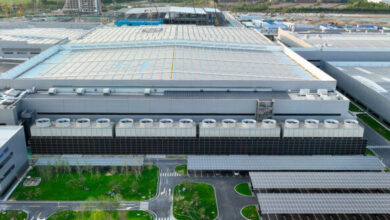
Nearly a decade after its initial political announcement, Australia’s massive Snowy 2.0 pumped hydro project is nearing completion amid a radically transformed energy landscape. Conceived in 2017 by then-prime minister Malcolm Turnbull following a blackout in South Australia, the multi-billion-dollar initiative was designed to anchor a grid transitioning away from fossil fuels. Since then, however, grid-scale batteries, rooftop solar, and household storage have advanced at a pace few anticipated, prompting energy experts to re-examine the long-term utility and cost-effectiveness of the underground engineering feat.
Originally budgeted as a political priority, Snowy 2.0 has faced severe design immaturities, complex hard-rock tunneling beneath Kosciuszko National Park, and a cost blowout reaching approximately $25 billion—roughly 12 times its initial estimate. Stephanie Bashir, CEO of Nexa Energy and a former AGL Energy executive, noted that while the project was conceived during a different era of centralized planning, the broader energy sector has rapidly decentralized. Wind farms, solar installations, and batteries can now be deployed almost anywhere, shifting the paradigm of power generation.
Despite the rapid growth of battery storage, proponents argue that Snowy 2.0 offers a scale of long-duration energy storage that chemical batteries cannot easily match. The project connects two existing dams via tunnels and six reversible turbines situated 800 meters underground in a power station expected to be finished by late 2029. While gigawatts measure instantaneous power delivery, gigawatt-hours measure energy available over time. According to Snowy Hydro, Snowy 2.0 boasts a generating capacity of 2.2 gigawatts and 350 gigawatt-hours of energy storage. By comparison, prominent battery installations like Origin Energy’s upcoming 500-megawatt, eight-hour storage system at the retiring Eraring coal-fired power station serve shorter durations.
Australian National University infrastructure expert Professor Marnie Shaw pointed out that while numerous batteries are being installed across the country, their combined capacity totals roughly 30 gigawatt-hours—only one-tenth of Snowy 2.0’s energy storage volume. The Australian Energy Market Operator’s road map to 2050 indicates Australia will require about 650 gigawatt-hours of dispatchable storage, positioning Snowy 2.0 to supply more than half of that long-term requirement.
Yet the project continues to face skepticism from industry analysts regarding its practical application. Victoria University’s Professor Bruce Mountain has questioned how frequently its touted capacity will be usable, noting that the upper Tantangara Reservoir relies on water pumped from a lower dam fed by limited river inflows. Once the facility discharges its stored energy continuously for its maximum duration, replenishing that immense resource requires significant water availability.
Associate Professor Roger Dargaville of Monash University similarly noted that operating Snowy 2.0 continuously for two weeks is unlikely to occur in practice, serving primarily as an insurance policy. However, Dargaville acknowledged a distinct financial advantage for pumped hydro: expanding deep storage capacity requires merely enlarging the reservoir at a relatively low incremental cost, whereas doubling battery storage requires doubling the total expense.
As the project targets completion in late 2029, critics argue that market volatility will need to remain exceptionally high for the facility to recoup its massive capital investment. Yet with an operational design lifespan of 150 years, supporters maintain that long-duration storage will retain enduring value in a renewable-dominated grid. Bashir suggested that while long-duration storage remains vital, future initiatives will likely favor smaller, modular, and more rapidly deployable pumped hydro projects rather than massive centralized builds.