Researchers investigating the waters off the southern coast of Turkey have identified a shipwreck site that could rank among the oldest known maritime wrecks in the world. While the findings still await peer-reviewed publication and further verification, investigators believe the site has the potential to reshape historians’ understanding of early Bronze Age commerce and the origins of modern maritime trade routes.
The discovery stems from long-term underwater survey work conducted by Hakan Öniz, an associate professor at Akdeniz University. Acting on tips provided by local mariners, Öniz located the wreck in 2024 within shallow waters near Kekova, west of Antalya. He subsequently assembled a specialist team to assist with artifact analysis and chronological dating.
Because the vessel has rested in seawater for millennia, its wooden hull structure has completely disintegrated, leaving no visible trace of the ship itself. However, by examining the surviving cargo and pottery characteristics, the research team estimates that the vessel and its contents date from between 2700 BCE and 2400 BCE. Investigators emphasize that this chronology remains subject to adjustment as laboratory analysis continues.
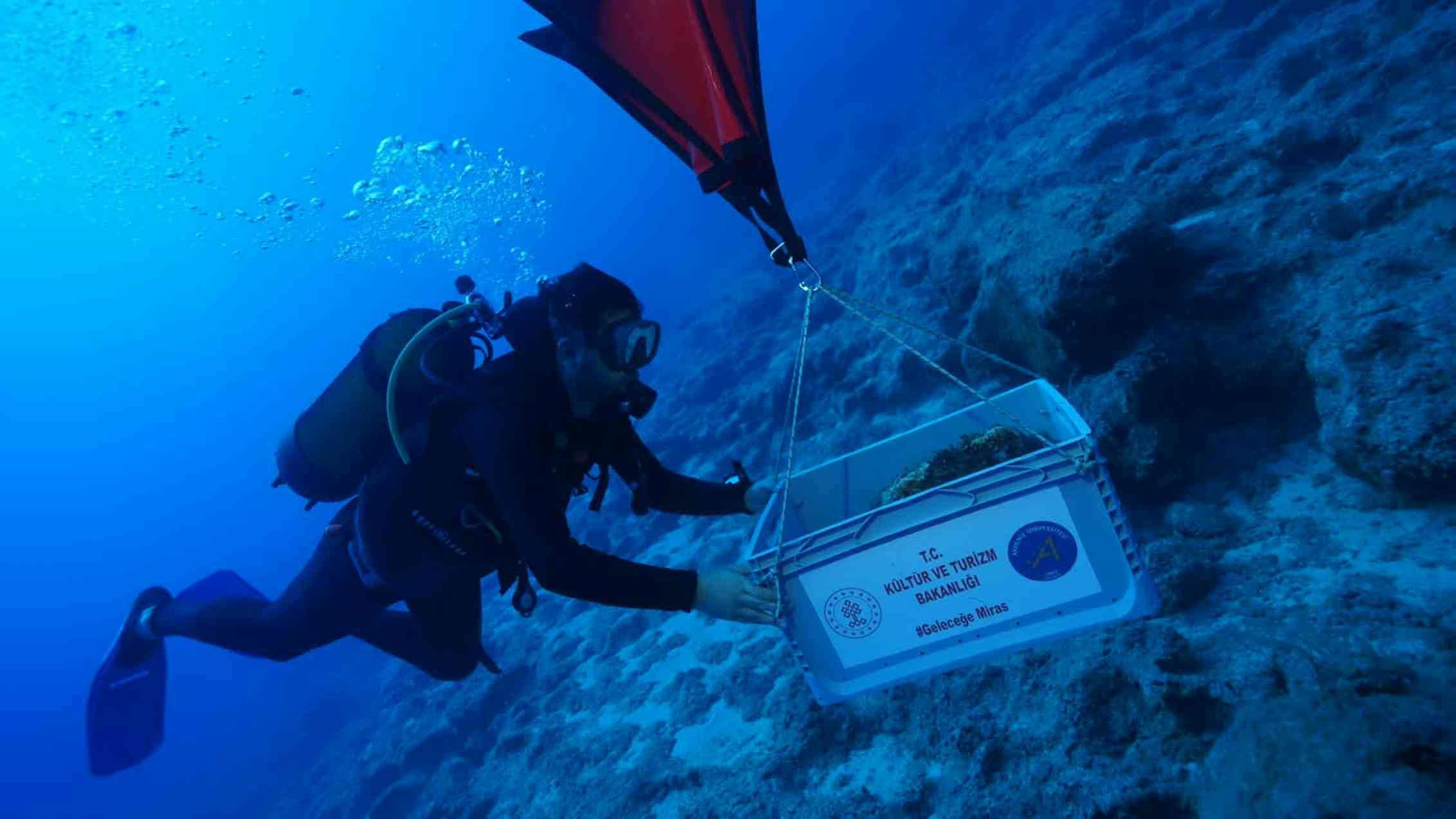
Scholars view the site as a crucial missing link in understanding the exchange systems of the eastern Mediterranean approximately 4,500 years ago, coinciding with the era when Egyptian pharaohs were rapidly developing their kingdom. Although the ship’s exact destination remains unknown, researchers believe it was navigating along the southern coast of Turkey when it became trapped between two islands during a storm. The vessel likely struck rocks while attempting to find shelter in lee waters, and investigators suggest the crew may have originated from the Levant region along the eastern Mediterranean coast.
While the hull is gone, valuable cargo remains embedded in the rocky slopes along the Kekova coast. Over a four-month period, underwater archaeologists have cleared marine sediments and barnacles from the rocks and pottery before recovering the artifacts. Ceramic vessels have emerged as the primary key to interpreting the wreck’s history. Archaeologists note that pottery functions similarly to modern plastic—while fragile and prone to breaking, it resists complete destruction and preserves historical data over millennia.
The recovered cargo consists primarily of large storage containers known as amphorae, which were used to transport vital commodities across the eastern Mediterranean. These vessels are largely large and oval-shaped with flat bases, handles on both sides, and raised horizontal clay bands encircling their widest sections. Analyzing the amphorae allows researchers to reconstruct manufacturing origins, transport routes, and the types of goods traded, while also establishing chronological links to contemporary archaeological sites.
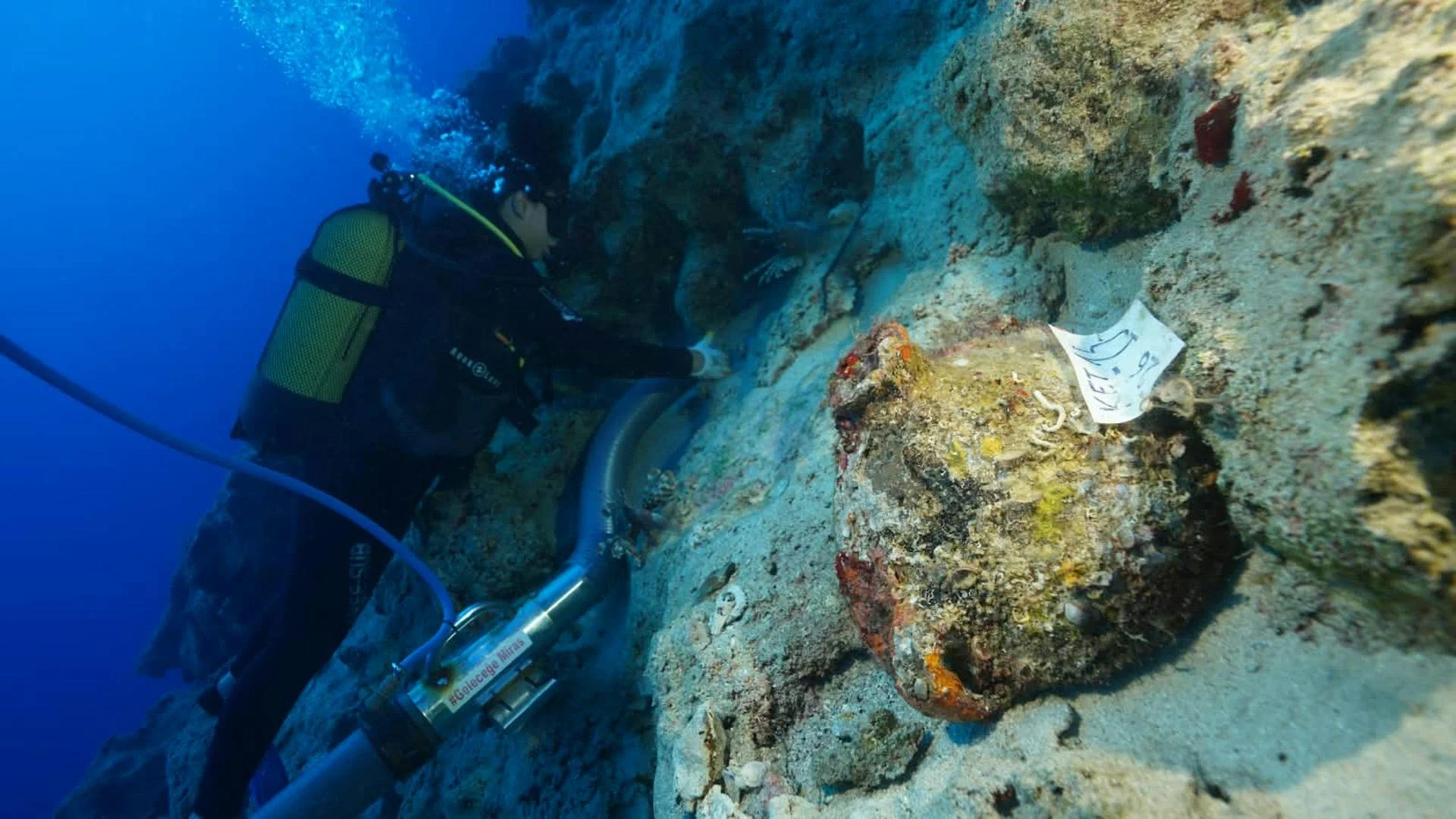
Relatively little remains known about eastern Mediterranean trade during the third and second millennia BCE compared to later historical epochs. Existing knowledge largely relies on ancient Egyptian texts, ceramic remains, and raw materials recovered from tombs. During the period when the vessel sank, Egypt maintained trade ties with the eastern Mediterranean through the Phoenician port of Byblos in modern-day Lebanon. Scarce resources including cedar wood, tin, lead, oils, resin, lapis lazuli, and silver flowed into Egypt through these networks, with recent scientific studies indicating that Egyptian silver imports around 2600 BCE originated from the Lavrion mining district east of Athens.
Researchers suggest that while Egyptian vessels may not have sailed to such distant regions independently, commercial cargo carriers like the Kekova vessel likely served as vital links in international maritime networks. Laboratory testing will eventually clarify the contents of the amphorae, though researchers can already observe residual sediments inside some containers. Experts theorize the vessels may have carried commodities mentioned in Egyptian records, such as olive oil, wine, or tree resins. Furthermore, stylistic variations suggest the amphorae may not have originated from a single port but were instead loaded progressively along the route, with certain pottery styles or clays potentially tracing back to the central Jordan Valley.
Turkey’s southern coastline contains numerous ancient shipwreck sites. Although marine archaeology remains a young discipline in the region, some of the world’s most notable ancient wrecks have been discovered in these waters. Researchers indicate that the Kekova discovery represents only a beginning, with future investigations expected to reveal further insights into ancient civilization and maritime exchange.