Artificial intelligence developer Anthropic has taken significant steps toward a public stock offering, revealing both rapid commercial growth and profound financial commitments in its regulatory filings. The company has established a strong foothold in the enterprise market, particularly within software development, by embedding model capabilities directly into developer workflows and selling high-value operational tools.
Financial disclosures indicate that Anthropic generated $4.59 billion in revenue during 2025, with that figure accelerating to $16.29 billion in the first half of 2026. However, the same documentation exposed a net loss of $80.7 billion for the first half of 2026. The vast majority of that figure—approximately $72.4 billion—stemmed from changes in the fair value of convertible notes rather than direct cash outflows, leaving a true operating loss of about $693 million.
Despite the underlying operating loss being smaller, investors face mounting pressure regarding future obligations. Anthropic’s prospectus outlines long-term compute procurement commitments exceeding $518 billion over the coming decade, with roughly 80 percent categorized as non-cancellable or payable regardless of actual usage. Having raised a cumulative $150 billion since its inception, the company is now targeting a $100 billion capital raise through its upcoming initial public offering. Market observers note that the listing arrives at a sensitive time, as Wall Street exhibits ongoing anxiety over heavy corporate spending on artificial intelligence infrastructure.
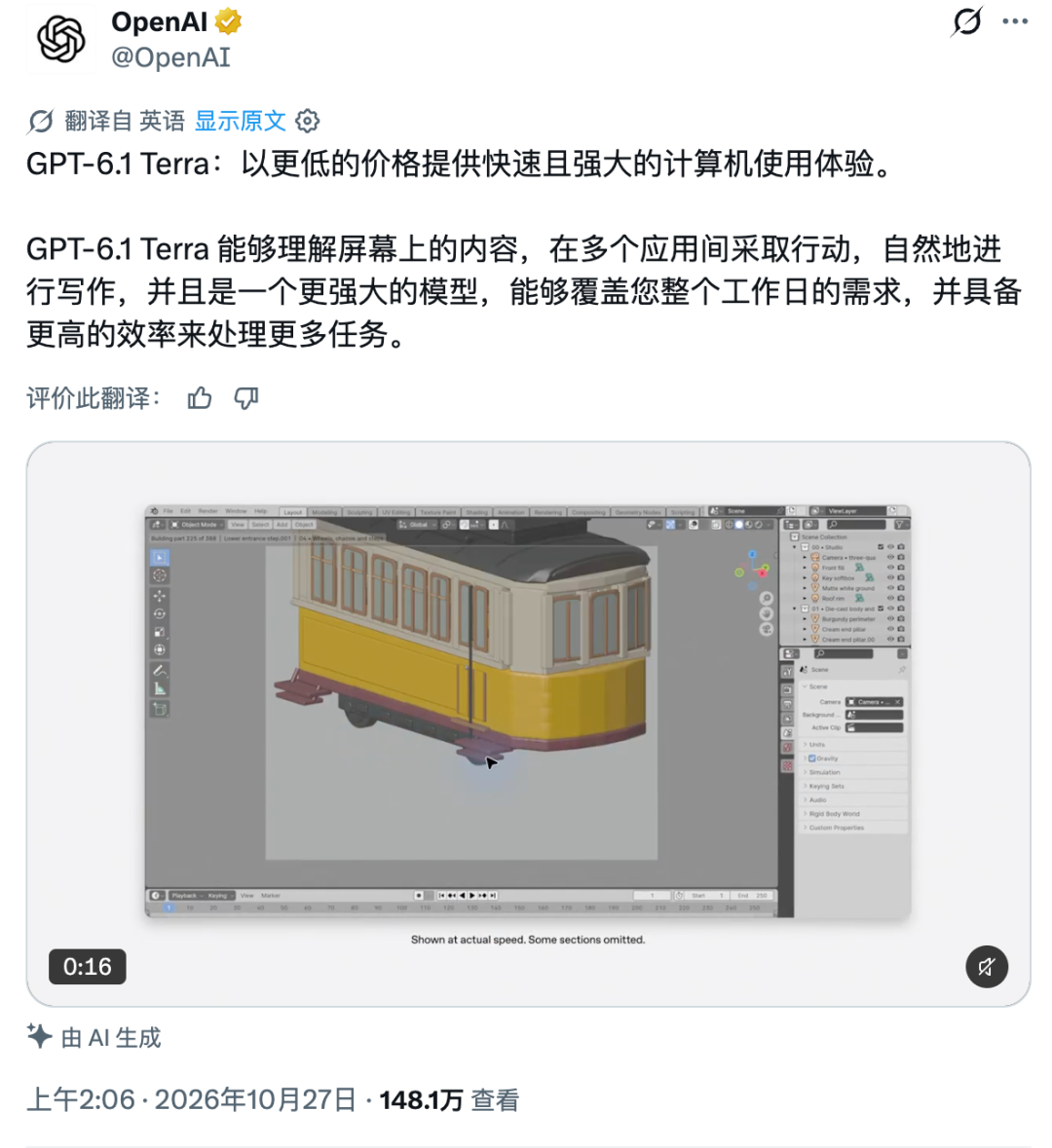
At the same time, industry rivals are altering their competitive strategies in response to shifting market demands. OpenAI has adjusted its product lineup toward cost-sensitive offerings. On September 23, the organization introduced the Sol and Luna models, pricing Luna’s API input at a floor rate of $10 cents per million tokens before rolling it out to free ChatGPT users in October. By October 26, OpenAI released the GPT-6.1 Terra mid-range model, emphasizing computer operation tasks and cutting standard API prices by 50 percent compared to the preceding generation.

Simultaneously, cost-focused competitors are expanding rapidly. Market participants indicate that low-cost model developer DeepSeek has seen its latest fundraising round surpass 100 billion yuan, following a 51 billion yuan round earlier in the year. This brings the company’s total recent fundraising to approximately 150 billion yuan at a pre-money valuation of 500 billion yuan. The financing effort drew backing from more than 20 institutional investors, including corporate and industrial heavyweights across telecommunications, energy, manufacturing, and consumer technology sectors.
With fresh capital secured, DeepSeek has embarked on an aggressive expansion of its personnel and infrastructure. Following a June recruitment push aimed at doubling departmental headcounts across seven core areas, the organization opened roughly 150 additional roles in September. These recruitment efforts span technical development, computing infrastructure, product deployment, and advanced algorithmic research, accompanied by substantial compensation packages for top-tier engineering talent.

The divergence in strategic approaches highlights a broader industry tension between high-margin enterprise software delivery and low-cost infrastructure efficiency. While Anthropic continues to pursue enterprise productivity and high-value developer automation, competitors are increasingly pressed to demonstrate scalable economics and lower inference costs as global artificial intelligence competition intensifies.