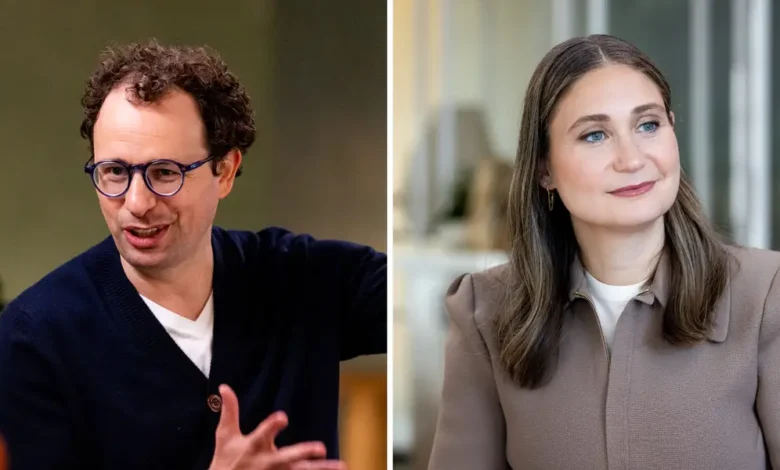
When Dario and Daniela Amodei first launched the artificial intelligence startup Anthropic with five other colleagues, industry observers warned that a seven-founder structure was a recipe for organizational failure. Now, more than five years after the company’s inception, the siblings are defending that unusual leadership model as the primary engine behind their success. The comments come at a critical juncture for the San Francisco-based firm, which recently filed paperwork for a public offering that could become the largest in history.
Speaking on the podcast The Builders, Dario Amodei, the company’s CEO, and Daniela Amodei, its president, described a governance culture built on radical honesty and mutual trust. Dario Amodei noted that all seven co-founders hold equal stakes in the company and share a unified vision, which he identified as a necessary prerequisite for resolving the high-stakes disagreements that frequently arise in the AI sector. These disputes often center on complex issues, such as the specific safety safeguards applied to large language models or the appropriate strategy for navigating government regulations.
According to the CEO, these disagreements are managed in good faith because there is an underlying belief that every founder is working toward the correct technical or ethical answer. He contrasted this internal environment with his previous experiences in the industry, suggesting that the level of transparency at Anthropic is a deliberate departure from the standard operating procedures at other major AI laboratories. Daniela Amodei added that this focus on integrity is not just an internal management style but a reflection of how the company intends to develop its technology, suggesting that the treatment of employees and leadership sets the tone for the AI systems themselves.
This culture of founder control is codified in the company’s S-1 filing. Under a unique governance arrangement, the seven original founders will retain 50.1% of all shareholder votes. This structure ensures that the founding group maintains a majority of voting power, even as the company moves toward the public markets. Despite the significant personal wealth this control represents—with co-founders standing to earn billions—each has pledged to donate 80% of their personal equity in the company to philanthropic causes.
Financial disclosures within the S-1 reveal the staggering scale of Anthropic’s operations and the costs associated with the AI arms race. The company reported a net loss of $42 billion last year against revenue of $4.6 billion. The filing also highlights a high degree of revenue concentration, with just five customers accounting for approximately 25% of the company’s total revenue during the first nine months of the year. Compensation for the Amodei siblings was also detailed, with the duo receiving total packages valued at approximately $35 million last year.
As Anthropic targets a debut on the Nasdaq this November, it is eyeing a valuation between $1.5 trillion and $2 trillion. If achieved, this would represent the largest initial public offering ever recorded. However, the path to the public market is not without significant hurdles. The company’s own filing includes more than 90 pages of risk factors, including a stark warning that a “catastrophic AI-related incident” could occur that would be so severe it could potentially overwhelm the capacity of the entire insurance industry.
While the company’s growth and technical trajectory have been aggressive, some investment experts have voiced concerns regarding the broader market’s ability to absorb such a massive valuation. The transition from a tightly controlled private entity with a seven-person founding core to a public giant will test whether the “inherent trust” described by the Amodeis can survive the scrutiny and quarterly demands of the public markets.