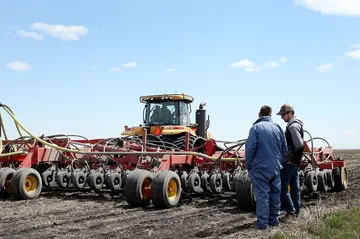
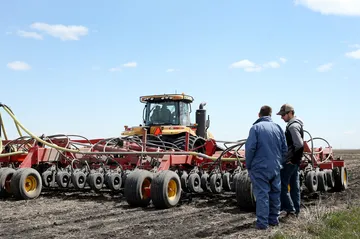
America’s major agricultural firms are signaling an extended period of market uncertainty, driven by record diesel prices, escalating geopolitical conflicts, and uneven export demand that continue to pressure farmers and machinery manufacturers alike.
Crop trader Bunge Global SA and tractor manufacturer AGCO Corp. outlined a difficult global landscape on Thursday after posting third-quarter earnings that surpassed Wall Street expectations. Despite the earnings beats, executives pointed to mounting strains from international trade tensions, regional wars, and elevated input costs affecting agricultural producers worldwide.
“We’re entering into next year with about as complicated an environment as we’ve seen in a long time,” Bunge Chief Financial Officer John Neppl told investors during a Thursday earnings call, describing the operational climate as highly dynamic and uncertain.
Global supply chains for vital commodities and farming inputs—including wheat, fuel, and fertilizer—face persistent disruptions stemming from ongoing conflicts in the Middle East and the Black Sea region. These supply chain pressures reverberate through the entire agricultural ecosystem, ultimately influencing retail prices for consumers. While Bunge maintained its full-year earnings guidance, AGCO adjusted its annual sales outlook downward, citing the combined weight of high diesel and fertilizer expenses, rising interest rates, and downward pressure on crop prices that have dampened farmer sentiment and equipment demand.

AGCO Chief Executive Officer Eric Hansotia noted that global demand has slumped to its weakest level in over a decade. Nevertheless, the company anticipates that the current downturn represents the bottom of the cycle, with a gradual recovery expected to materialize in 2027.
Market reactions to the earnings reports varied. Bunge shares fell as much as 3.6% in New York trading, with analysts interpreting the company’s unchanged guidance as a signal of softer financial results ahead in the fourth quarter. Conversely, shares of AGCO climbed as much as 8.3%.
Both corporations emphasized the profound impact of shifting trade policies and geopolitical friction on international agriculture. Bunge CEO Greg Heckman highlighted the company’s operational flexibility in navigating these disruptions, pointing to its capacity to redirect crop flows and bypass physical constraints to maintain connections between global supply and demand.
The St. Louis-based grain handler projected slightly lower performance in its soybean processing segment due to shrinking margins across the United States, Brazil, and Europe. However, the firm expects stronger results in grain merchandising and milling, supported by forecasts for robust grain harvests in Australia and Canada, even as Black Sea supplies remain constrained.

Commodity markets have experienced notable volatility. Soybean and corn futures recently touched multi-month lows before trimming losses, as autumn harvest supplies outpaced current demand. Meanwhile, wheat futures advanced following reports that China initiated inquiries regarding U.S. wheat shipments in the wake of a presidential summit held in September. Bunge is closely monitoring the implementation of China’s commitment to purchase 25 million tons of U.S. soybeans annually through 2028, a pledge that influences buying patterns among American producers.
Commenting on international competition, Heckman noted that Brazil remains a major supplier to China, with purchasing decisions ultimately dictated by prevailing economic efficiencies.