How Surveillance Video and Forensics Unraveled an Alabama Man’s Claim That His Wife Died by Suicide

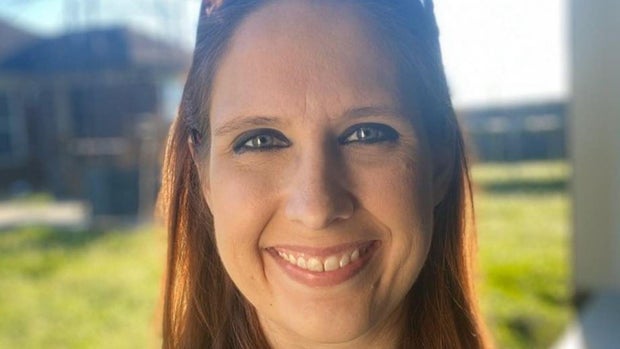
On November 15, 2022, a Huntsville, Alabama, strip mall became the center of a frantic police response after 37-year-old Savannah Tolbert was discovered dead from a gunshot wound in the front seat of a red Tesla. Her husband, David Tolbert, a 47-year-old retired corrections officer, appeared visibly distraught at the scene, telling authorities he found her lifeless body inside the vehicle after she drove to visit him at his workplace.
From the outset, investigators with the Huntsville Police Major Crimes Unit encountered troubling discrepancies. First responders found Savannah’s fingers curled around a gun in her right hand and resting on her lap. However, the fatal bullet wound entered the back of her head near the left side. Investigators Greg Hayden and Jeff Kreiter noted that the physical positioning did not align with a self-inflicted gunshot, particularly given that Savannah was right-handed and the weapon was positioned away from close contact.
Savannah’s sisters, Holly and April Hancock, immediately rejected the notion that she had taken her own life, describing her as deeply devoted to her family and her daughter, Avery. Although David Tolbert and investigators discussed Savannah’s history of anxiety, depression, and recent hospitalizations for mental health struggles, her family insisted she was frightened rather than suicidal. Months prior to her death, family members and her former husband, Andy Foster, had observed sudden shifts in her demeanor, leading to voluntary hospital stays in Birmingham and Nashville.
As the investigation widened, detectives uncovered that David Tolbert was having an intimate relationship with Chelsea Finch, an aerospace missiles engineer who had sought his help with her own Tesla. Finch told police that David claimed he was going to leave his wife and that they were in love, though Savannah had not signed divorce papers that David had given her three days prior to her death. Authorities found those unsigned papers inside the red Tesla where Savannah’s body was discovered.
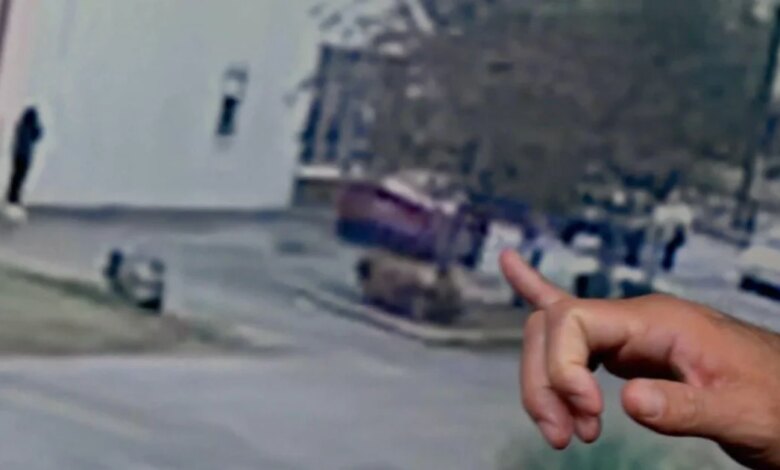
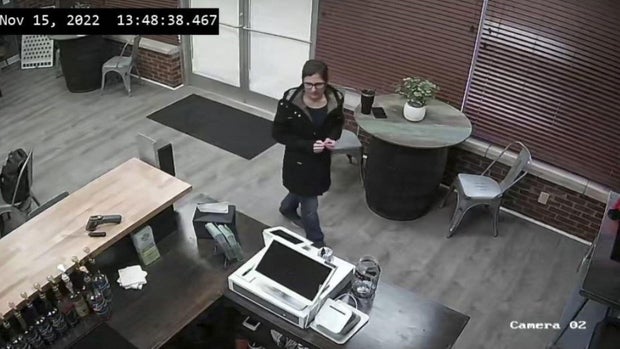
Police gathered extensive video evidence, including footage from the store where David was working and a more distant security camera located about 100 yards away on the roof of a Valley Pools store. By synchronizing the store cameras with the grainy parking lot footage, investigators constructed a precise timeline. The footage showed Savannah arriving in her blue Kia Sorento shortly before 2:00 p.m., greeting David with a hug, and walking outside. Investigators traced her entering the passenger side of the red Tesla at approximately 2:15 p.m. No other person was seen approaching that door afterward.
Roughly 20 minutes later, security footage captured a figure in dark clothing—identified by police as David Tolbert—approaching the driver’s side of the vehicle. Investigators believe David opened the door, drew a weapon, and shot Savannah after she turned away from him. Although David’s red Tesla was equipped with Sentry Mode exterior cameras designed to record 360-degree activity, investigators discovered that no memory card was inserted on the day of the shooting.
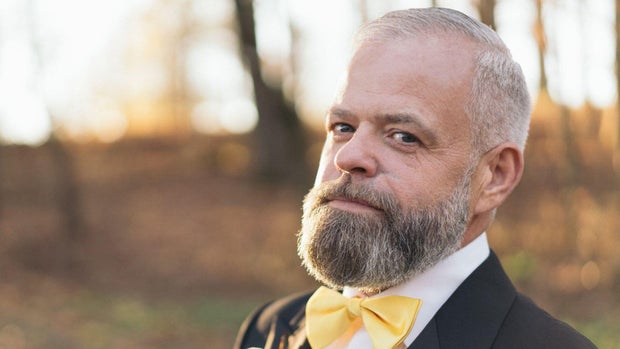
When questioned by police, David tested positive for gunshot residue on his hands. He initially attempted to explain the residue by claiming a collectible toy cannon in his car had fallen off a seat, though surveillance video showed he never visited the trunk upon arrival. Further forensic testing cemented the case against him. Dr. Jonrika Malone, a state medical examiner for the Alabama Department of Forensic Sciences, determined that the lack of gunpowder stippling indicated the gun was fired from a distance of at least three to four feet away, making suicide physically unfeasible for someone seated in a car headrest configuration. The manner of death was officially ruled a homicide.
On December 9, 2022, David Tolbert was arrested and charged with capital murder, an enhancement applied because the crime occurred while the victim was inside a vehicle. Prosecutors Shea Keller and Ben Gibbons argued during the May 2025 trial that David manipulated those around him and used his wife’s mental health struggles as a scapegoat to cover up a premeditated murder aimed at pursuing his relationship with his mistress.
Following a three-day trial in Huntsville, a jury deliberated for approximately three hours before finding David Tolbert guilty of capital murder. He was sentenced to serve life in prison without the possibility of parole at the Limestone Correctional Facility—the exact prison where he had once worked as a corrections officer.