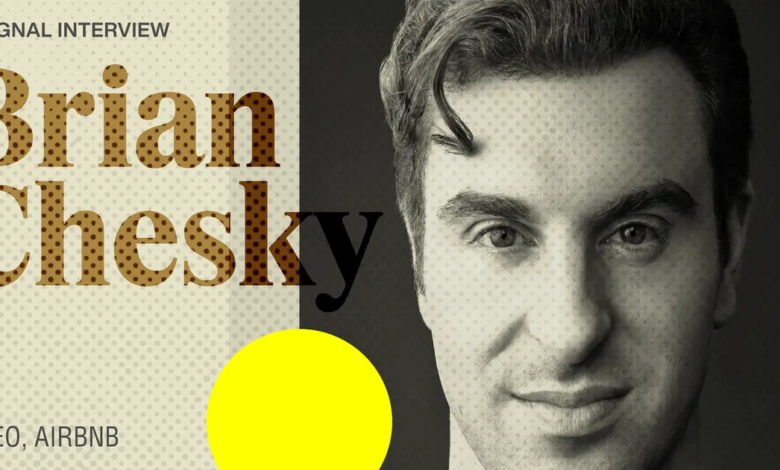
Nearly two decades after co-founding Airbnb, Brian Chesky is attempting to redefine the role of the tech founder in an era increasingly defined by social isolation and the rapid rise of artificial intelligence. Chesky, an industrial designer by training in a region dominated by engineers, argues that Silicon Valley has retreated into a bubble, creating a disconnect where society feels that technological progress is happening to them rather than for them.
At the center of Chesky’s new blueprint is a shift in Airbnb’s fundamental purpose. While the company achieved its initial goal of making home-sharing a mainstream alternative to hotels, Chesky is now positioning the platform to address what he describes as the “loneliest time in human history.” He argues that the very technologies meant to connect people—e-commerce, online banking, and social media—have effectively removed humans from the physical world, replacing face-to-face interactions with isolated digital experiences.
To counter this, Chesky plans to leverage Airbnb’s “system of trust,” which includes more than 290 million users and 5.5 million verified hosts, to facilitate new types of “matchmaking.” While the company is keeping specific details confidential until next year, the CEO has indicated that the platform will expand into helping people find roommates, secure long-term property rentals, and integrate into new communities. The goal, he says, is to “use a device to get you off a device,” turning Airbnb into a real-world social graph rather than a mere booking engine.
This shift in mission coincides with a more aggressive stance on the housing affordability crisis, an issue that has frequently pitted Airbnb against local governments in cities like New York and Barcelona. Chesky acknowledges that while Airbnb is often blamed for rising rents, the company’s listings typically account for only about 0.5% of housing stock in major markets. He maintains that many of these units are primary or secondary homes that were never part of the long-term rental market to begin with.
However, Chesky admits the company has a responsibility to act. To that end, Airbnb recently announced a $250 million fund designed to provide “last-dollar” financing for housing projects that have stalled due to funding gaps. Chesky estimates this investment will unlock an additional $5 billion in new housing construction. While the fund is expected to generate a return, albeit lower than traditional real estate investments, Chesky views it as a strategic move to place the company “on the right side” of the housing issue. He predicts that housing affordability and AI will be the two most consequential issues of the 2028 U.S. presidential election.
Chesky’s critique extends to the current state of AI development. He compares the present moment to a “Promethean moment” for which society remains largely unprepared. He notes that while technology was once viewed as a vehicle for progress, many people now feel like they are on the “train tracks” with the train of AI heading directly toward them. He warns his fellow tech leaders that if the industry fails to regulate itself or include “humanity” in its design principles, a heavy-handed government “hammer” will eventually come down.
Chesky is positioning himself as a “bridge-builder” between the tech heartland, Washington policymakers, and ordinary citizens. He suggests that AI founders should abandon lofty goals like “saving humanity” and instead focus on tangible, immediate problems such as cybersecurity. He also urges executives to spend more time talking to people they do not pay—individuals who are willing to offer blunt, unvarnished feedback about why they may dislike certain tech products.
This hands-on philosophy is a hallmark of Chesky’s “founder mode,” a management style he adopted following the pandemic-induced collapse of Airbnb’s business in 2020. After revenue dropped by 80% in the early weeks of the global shutdown, Chesky restructured the company and eliminated layers of management. He now describes his role as an “editor-in-chief,” personally reviewing every product before it reaches the public and engaging in what he calls necessary micromanagement. He compares this approach to a golf instructor who must closely watch a student’s swing before eventually letting go.
As part of this leadership shift, Chesky has become the company’s primary recruiter, spending two to three hours a day interviewing candidates for the top 200 roles at Airbnb. By acting as a “co-hiring manager,” he aims to build a direct connection with the company’s second tier of leaders, ensuring they are committed to the long-term “dream of tomorrow” rather than just the current executive structure. For Chesky, that dream is no longer just about travel, but about creating a global infrastructure for human connection and community integration.