Why the 2026 Midterms Are Emerging as a Defining Battleground for American Healthcare Reform

As voters grapple with rising medical expenses, public anxiety over the cost of care has outpaced concerns about everyday essentials like housing, groceries, and gasoline. A recent KFF poll indicates that 60 percent of U.S. adults worry about medical costs, while a survey from the Pew Research Center shows that one in three Americans think about their ability to afford healthcare daily or near-daily. Alongside this anxiety, public appetite for policy intervention has grown, with more than 65 percent of respondents expressing support for increased government spending of tax dollars to reduce healthcare costs.
Democrats are positioning themselves to capitalize on these widespread economic frustrations, with voters currently trusting them over Republicans on the issue of healthcare by a 2-to-1 margin. Yet, meaningful legislative changes will depend heavily on the outcome of the November 3 midterm elections, which political figures and advocacy groups describe as an existential test for the future of policymaking.
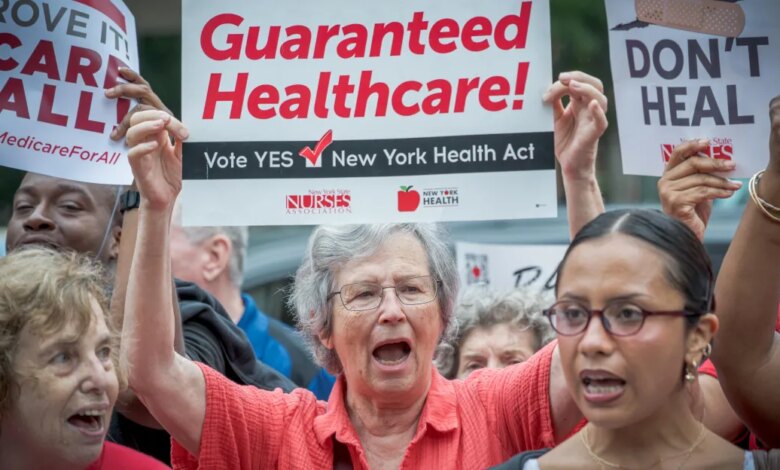
In the Michigan Senate race, Democratic candidate Abdul El-Sayed has made his support for single-payer reform a central theme of his campaign. Speaking in an interview, El-Sayed argued that a Medicare-for-all approach is the necessary direction for the healthcare system, expressing hope that success in the 2026 midterms and the 2028 elections will pave the way for a Senate majority capable of enacting the policy.
While real legislative transformation must wait for a new presidential administration in 2029, the midterms serve as a vital precursor. Natalie Davis, CEO and co-founder of the advocacy group United States of Care, emphasized that the 2026 and 2028 cycles will guide the next major shift in the healthcare system, dictating whether future reforms involve serious restructuring or represent another missed opportunity.
Political analysts often draw parallels to the 2006 midterms, when voter dissatisfaction with the administration of George W. Bush helped Democrats secure significant majorities in both the House and the Senate. That wave energized the progressive wing of the party, paved the way for Barack Obama’s presidential victory, and ultimately established the groundwork for the passage of the Affordable Care Act in 2010. Furthermore, the size of congressional majorities proved decisive. In 2009, Democrats held a critical 60-seat supermajority in the Senate—secured through competitive races won by candidates like Mark Pryor in Arkansas, Sherrod Brown in Ohio, and Jon Tester in Montana—which enabled them to overcome procedural hurdles despite internal moderate resistance that ultimately precluded options like a public health insurance option.
Looking ahead to the upcoming elections, political projections anticipate Democrats capturing between 10 and 20 House seats, though the exact cushion will dictate how aggressively lawmakers can pursue their legislative goals. The Cook Political Report has identified 21 toss-up races nationwide, including competitive contests in Arizona’s 6th District, Colorado’s 8th District, and Florida’s 22nd District, where local voters could hold an outsized influence on the trajectory of federal policy.
In the Senate, a sweep of competitive seats could expand the Democratic caucus to 55 members ahead of the 2028 presidential cycle. Voters in states such as Kansas, Michigan, Ohio, Texas, Alaska, Maine, New Hampshire, and Iowa face high-stakes ballots that could influence the feasibility of ambitious health legislation or potential parliamentary maneuvers surrounding the legislative filibuster.
Even before any bill reaches a presidential desk, the results of the midterms will shape the internal debate among Democrats. Analysts note that lawmakers are likely to advance symbolic legislation next year to test policy ideas and measure caucus support, much like the first Medicare prescription drug negotiations bill introduced following the 2006 elections, which did not become law for another 15 years.
Larry Levitt, executive vice president for health policy at KFF, observed that while Democrats are currently aligning around various proposals—from free primary care and revived public options to full-scale Medicare-for-all championed by candidates like El-Sayed in Michigan, Randy Villegas in California, and Troy Jackson in Maine—the party lacks the unified coalescing around a single dominant blueprint that preceded the Affordable Care Act in 2008. Whether progressive candidates succeed or fall short in these key races will likely dictate how ambitious the party’s platform remains heading toward 2028.