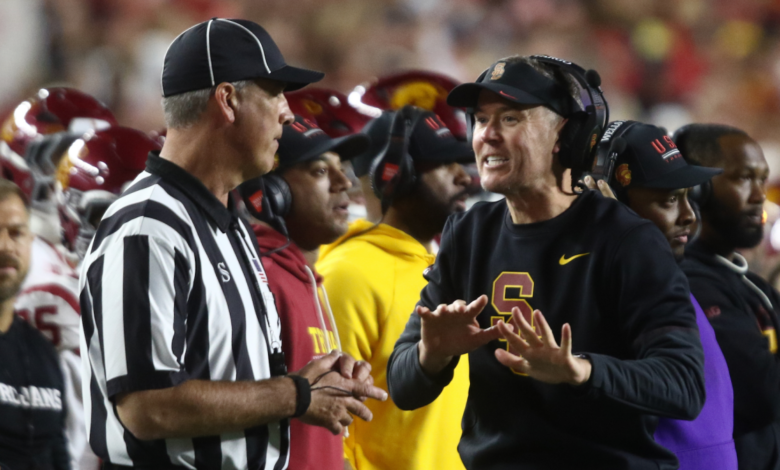
The Southern California football program is facing a moment of reckoning following a 24-7 loss to Wisconsin on Saturday night, a defeat that has exposed deep-seated issues within the Trojans’ offensive identity and placed head coach Lincoln Riley under the most intense scrutiny of his tenure in Los Angeles. Entering the game as the No. 16 team in the nation, USC failed to capitalize on an open date, delivering a performance in Madison that was characterized by an unprecedented collapse of the rushing attack and a failure to protect the quarterback.
The statistics from Saturday’s contest tell the story of a program struggling to adapt to the physical rigors of the Big Ten. USC, which entered the matchup boasting the conference’s seventh-best rushing offense, was held to minus-17 yards on 25 carries. This total includes yardage lost on sacks taken by quarterback Jayden Maiava, but it remains a damning indictment of the Trojans’ offensive line and play-calling. Maiava was forced to carry the entire weight of the offense, finishing the night 31-of-50 for 258 yards with one touchdown and two interceptions. Without any support from the ground game, the Trojans managed only a single touchdown drive, which occurred in the second quarter, before the offense went dormant.
The loss marks USC’s second of the season, and it comes at a critical juncture. While Riley has maintained a record of 41-20 overall in his fifth season, according to performance tracking, his record against elite competition has become a significant point of concern. Since arriving at USC, Riley is just 5-15 against top-25 opponents. This inability to win high-stakes games has severely hampered the Trojans’ ability to stay in the College Football Playoff conversation. Even more troubling is the context of USC’s conference victories this year; the three teams the Trojans have defeated in Big Ten play have a combined conference record of just 3-10.
The financial implications of a potential coaching change are staggering. Although Riley’s contract is private, industry estimates place his buyout at approximately $70 million. However, the conversation around the program has shifted from whether the university can afford to move on to whether it can afford to stay the course. This tension is heightened by the looming schedule, which features a gauntlet of top-tier opponents. USC still has to face a top-10 Ohio State squad, a surging Indiana team, and a rivalry matchup with UCLA in the final month of the season.
Riley has not shied away from high expectations, often fueling the fire with his own public statements. Over the summer, the head coach spoke of “palpable momentum” within the program, suggesting that the opportunity to win was more real than at any point in his first few years. He claimed that recruits, fans, and the national media could feel a shift in the program’s alignment. Following the flat performance in Wisconsin and a previous 41-27 setback against Oregon—a loss that came against what some consider Dan Lanning’s least potent squad—those claims of momentum are being met with heavy skepticism.
The Trojans’ season now hangs by a thread. With the College Football Playoff moving toward an expanded format, a nine-win season might typically be enough to secure a spot, but USC’s current trajectory makes that goal appear increasingly out of reach. If the team continues to struggle against ranked opponents like the Buckeyes and Hoosiers, the pressure on the administration to address Riley’s status will only intensify. For a program that prides itself on being a national powerhouse, the current slide represents a significant departure from the lofty goals set at the beginning of the Riley era.