President Donald Trump announced that a meeting will soon be arranged between Russian President Vladimir Putin and Ukrainian President Volodymyr Zelenskyy as part of an ongoing effort to bring an end to the war between their nations, which is now in its fifth year.
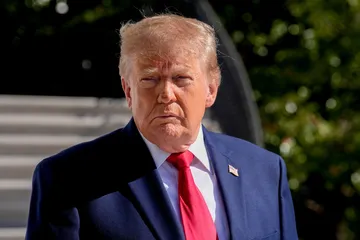
Speaking to reporters early Wednesday following a trip to Texas where he held two midterm election campaign rallies, Trump indicated that diplomatic momentum is building. “I think with Russia, we’re making a lot of progress with Russia-Ukraine,” Trump said, adding that “there’ll be a meeting set up here soon with President Putin and President Zelenskyy.”
When pressed on a specific timeline for the summit, the president offered a broad estimate. “I would say it’ll happen in the over the next not too long,” he remarked. He also noted that a resolution “could be done not necessarily through a meeting,” though he did not provide further specifics regarding alternative diplomatic channels.
Secretary of State Marco Rubio and special envoy Steve Witkoff accompanied Trump on his Texas trip. Trump mentioned that during the journey, they discussed both the conflict in Ukraine and the ongoing war with Iran.
In addition to European diplomacy, Trump discussed broader geopolitical talks, stating that he was meeting with Chinese President Xi Jinping regarding nuclear disarmament and that “certainly, Russia would fit into it.”
During his 2024 presidential campaign, Trump repeatedly promised that he could resolve the Russia-Ukraine war within 24 hours of taking office. However, the battlefield remains largely deadlocked, and formal negotiations since his return to the White House have thus far proven unsuccessful.
In recent weeks, Trump has voiced frustration with Zelenskyy, placing blame on the Ukrainian leader for contributing to higher U.S. energy costs through military strikes on Russian energy infrastructure. Economic analysts note, however, that the war with Iran, which erupted in late February, remains a more significant driver behind the soaring costs of gasoline and diesel fuel.
Surging prices for fuel, alongside ongoing cost-of-living pressures affecting healthcare and housing, have sparked voter discontent. Many Americans have accused the administration of failing to deliver on campaign promises to lower everyday prices.
These mounting voter anxieties have placed Trump’s Republican Party on the defensive ahead of next week’s midterm elections.