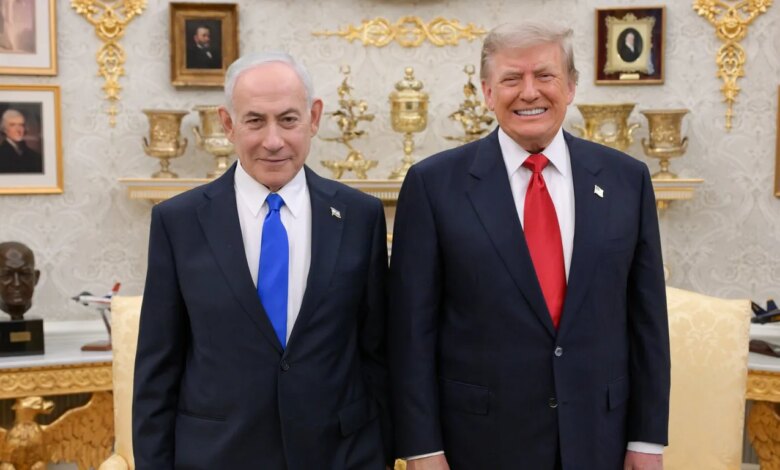
As Israel prepares for a high-stakes Tuesday election, the public endorsement of Prime Minister Benjamin Netanyahu by President Trump has masked a deepening strategic divide within the American administration. While the president has signaled his continued support for his long-time ally, a significant contingent of his senior advisers and top officials are beginning to view the potential for a new Israeli government as a necessary opening for the next phase of the U.S. Middle East agenda.
The relationship between Trump and Netanyahu has been historically close yet frequently turbulent. One Trump adviser described the president’s endorsement as a pragmatic choice, referring to Netanyahu as “the devil he knows.” However, the internal calculus in Washington suggests that even if Netanyahu loses, the White House sees a path forward. Officials noted that if Netanyahu remains in power, the president can claim credit for the victory and use that political capital to press for concessions. Conversely, if an opposition government takes the lead, new Israeli leaders would be highly motivated to cultivate a strong bond with the American president, likely relegating the endorsement of their rival to a historical footnote.
This internal tension became public this week when Vice President JD Vance pointedly declined to join the president in endorsing Netanyahu. Addressing reporters, Vance stated that while he was not attacking the prime minister, he would no longer involve himself in foreign elections—a shift in stance after he endorsed former Hungarian Prime Minister Viktor Orbán shortly before Orbán’s electoral defeat in April. Vance is among several senior Trump officials who have reportedly become disillusioned with Netanyahu, particularly following the war with Iran. Sources familiar with the administration’s internal thinking indicate that Vance and other top aides believe Netanyahu’s pre-war assessments provided to the White House were fundamentally mistaken, leading to questions about his long-term reliability as a strategic partner.
The dissatisfaction among the president’s inner circle extends to specific regional priorities. Trump’s envoys for Middle East peace, Steve Witkoff and Jared Kushner, have privately expressed frustration with Netanyahu’s perceived reluctance to move forward with the implementation of the president’s Gaza peace plan. Similarly, Tom Barrack, the administration’s envoy focusing on Syria, has raised concerns regarding the Netanyahu government’s approach to Damascus and the continuation of Israeli military operations in Syrian territory.
Even within the State Department, where Secretary of State Marco Rubio maintains a more cordial relationship with the prime minister, there are mounting grievances. Rubio’s team believes Israel could take more substantive steps to stabilize the Lebanese government and has expressed frustration over Netanyahu’s failure to curb attacks by settlers against Palestinians in the West Bank. Some officials have suggested that an Israeli government without the current far-right coalition partners might be more aligned with Trump’s broader goals, which include securing a historic peace agreement between Israel and Saudi Arabia and brokering new deals with Lebanon and Syria.
The prospect of a leadership change is supported by the latest data from Israel. Three major television networks released final pre-election polling on Friday, all of which show Netanyahu’s current coalition falling significantly short of a parliamentary majority. The polls project Netanyahu’s bloc will secure only 50 seats in the 120-member Knesset—a sharp decline from the 67 seats his coalition currently holds. His Likud party, which currently occupies 32 seats, is projected to drop to just 20.
In contrast, the opposition bloc led by former military chief Gadi Eisenkot is projected to win between 52 and 56 seats. A pro-Netanyahu outlet, Channel 14, remained an outlier by projecting 60 seats for the prime minister’s bloc, but the general consensus among pollsters points to a potential political deadlock. Eisenkot faces his own hurdles, as he would likely need the support of Arab Israeli parties—projected to hold 14 to 16 seats—to form a government, a move he has previously ruled out.
White House deputy press secretary Anna Kelly declined to comment on the internal deliberations, instead pointing to Trump’s endorsement of Netanyahu on social media. If neither the Netanyahu bloc nor the Eisenkot opposition can assemble the 61 seats required for a majority, Israel could be headed toward another round of elections. In that scenario, Netanyahu would remain in power as a caretaker prime minister, potentially leaving the Trump administration to navigate a weakened ally and a political system paralyzed by a prolonged crisis just as the U.S. looks to move forward with its ambitious regional peace plans.