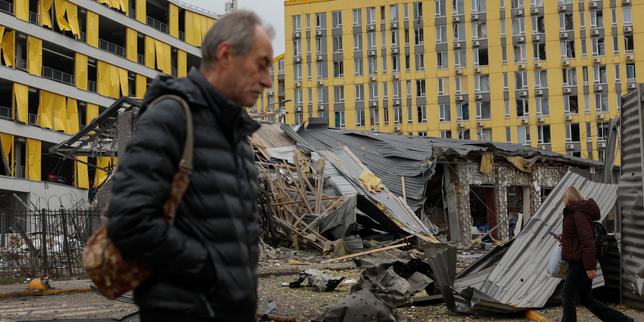
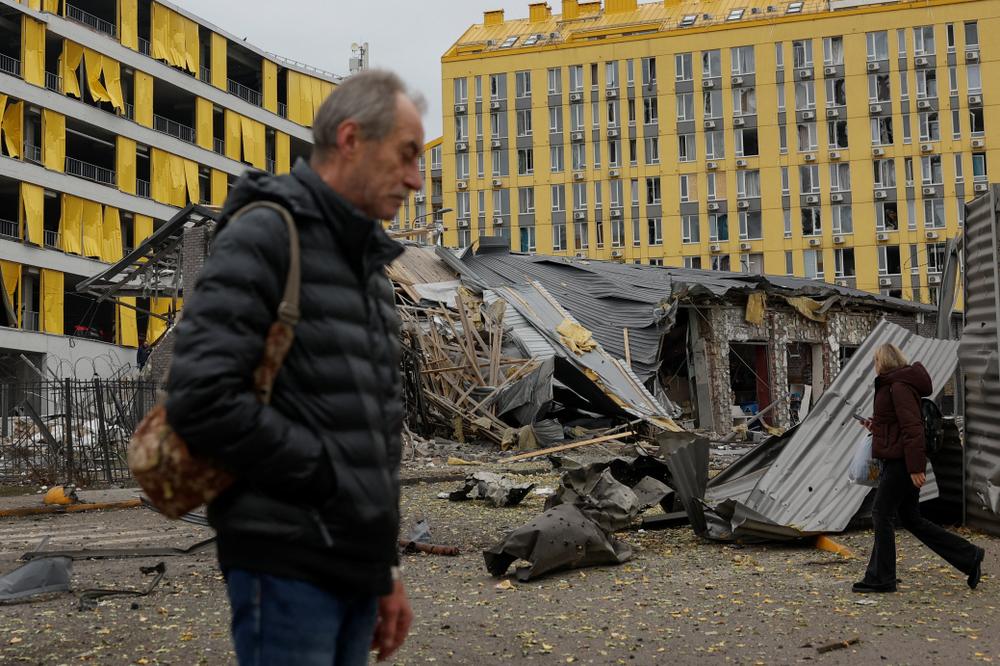
Hundreds of thousands of Ukrainian households faced power outages following heavy Russian bombardments that targeted critical energy and transit infrastructure across the Dnipro and Kyiv regions. Ukrainian President Volodymyr Zelensky reported that approximately 200,000 homes were left without electricity in Dnipro and its surrounding areas, while another 80,000 households lost power in the Kyiv region.
In the capital, Shahed-type drones struck a thermal and electrical power plant, according to Mr. Zelensky. In the Dnipropetrovsk oblast, four electrical substations were hit overnight alongside a natural gas distribution facility. Railway infrastructure in both Dnipro and Kharkiv was also targeted, with the railway station in Dnipro experiencing repeated strikes following a deadly drone attack earlier in the week that killed 15 people. Railway officials confirmed that passengers and personnel were successfully evacuated underground and that staff worked to keep trains running despite safety delays.
Energy Minister Denys Chmyhal informed parliament that the Russian military has targeted Ukrainian energy infrastructure more than 350 times since September, damaging 800 pieces of equipment across substations and power plants. Mr. Chmyhal noted that secondary physical protection added to 235 transformers has prevented widespread devastation, citing only one instance of a protected facility being destroyed by a ballistic missile over the past six months.
The renewed energy strikes occurred as a localized humanitarian ceasefire, brokered between Kyiv and Moscow, facilitated evacuations from the front-line city of Olechky in the Kherson region. Russian and Ukrainian human rights commissioners, along with parliamentary representatives, coordinated the departure of residents via a convoy comprising 25 buses and nine ambulances. Evacuated citizens traveled through Crimea to Belarus, where flights arranged via Gomel allowed those wishing to return to Ukrainian-controlled territory to do so. Ukrainian officials estimated that approximately 2,000 residents remained in Olechky prior to the operation, down from 24,000 before the invasion, though neither side released exact figures for those who chose to leave.

Meanwhile, diplomatic and military frictions persisted internationally. The United States State Department approved the sale of 500 Patriot PAC-3 MSE interceptor missiles to Ukraine, valued at approximately $2.1 billion, with funding provided by international partners including Canada, Germany, and Norway alongside European Union loan mechanisms. Mr. Zelensky welcomed the decision but expressed deep concern that delivery timelines might stretch over several years, warning that Kyiv urgently needs the interceptors immediately to counter ongoing ballistic missile attacks and protect its airspace.
At the G20 ministerial meetings in Atlanta, European Union foreign policy chief Kaja Kallas reported no indication of flexibility or willingness to negotiate from Russian Foreign Minister Sergei Lavrov. Conversely, Mr. Lavrov characterized his brief bilateral discussions with U.S. officials as pleasant and focused on diplomatic communication channels. Separately, Canadian Prime Minister Mark Carney confirmed at a summit in Montreal that Canada will contribute an initial 500 million euros toward a broader 90-billion-euro EU financial assistance package for Ukraine utilizing frozen Russian assets.