The familiar ritual of sorting through Halloween candy or grabbing an afternoon chocolate snack involves navigating decades-old favorites. But public health scrutiny led by federal officials and the Make America Healthy Again movement has increasingly focused on the ingredients inside those wrappers, particularly petroleum-based synthetic dyes. This regulatory and cultural pressure has sparked a major push among food manufacturers to alter their recipes, revealing unexpected engineering hurdles and substantial financial costs.
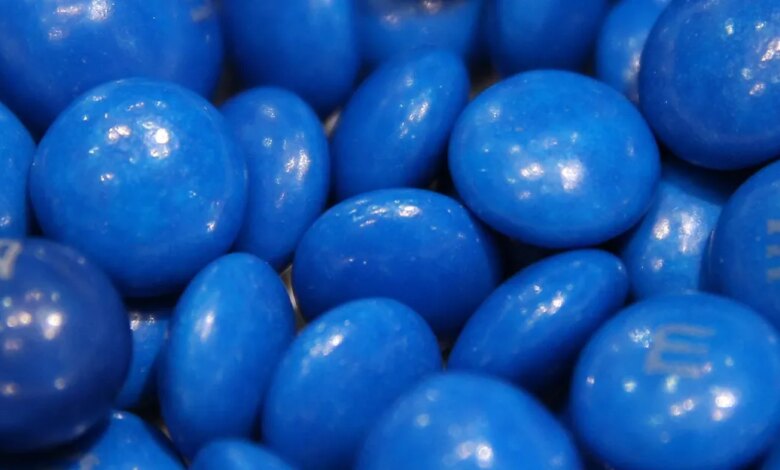
At the center of this shift is Mars, the maker of M&Ms, which promised customers an all-natural version of its chocolate treats. Yet producing an alternative without synthetic coloring has collided with basic manufacturing realities, most notably in the challenge of creating a natural blue M&M.
Federal health officials have targeted artificial food dyes for years, characterizing them as unnecessary chemical additives linked by some state agencies and researchers to hyperactivity in children, alongside other potential health concerns. By contrast, the Food and Drug Administration has long maintained that approved synthetic dyes are safe when used in accordance with established standards, though the agency acknowledges that some children may exhibit sensitivities.
Despite the differing scientific perspectives, industry pressure has prompted companies to explore natural alternatives. To understand the complexity of that transition, a recent reporting visit to a massive industrial Mars plant in Topeka, Kansas, detailed the vast scale of candy production. In these facilities, millions of small chocolate orbs—referred to as lentils—tumble through large revolving machines known as pans while liquid color is sprayed onto them.
Shifting this high-volume process from synthetic dyes to natural ones introduced significant operational complications. While artificial blue dye arrives at factories as a liquid easily mixed into a sugary syrup, natural blue coloring relies on spirulina, an algae-derived product that arrives as a powder.
Because spirulina is a protein, mixing it into the standard recipe dramatically thickens the resulting mixture. The altered consistency caused the liquid to clog piping and move less smoothly through factory machinery. Furthermore, the protein content led to buildup and coating on the interior of plant equipment, presenting potential food safety and mold hazards.
To address these hurdles, Mars initiated a multimillion-dollar retrofit affecting approximately 300 types of machinery across its plants. However, the sheer volume required for mass production made a natural blue dye cost-prohibitive at scale. Because color theory dictates that blue is essential for blending green and brown shells, the limitations of spirulina affected multiple colors. While green required small enough quantities of spirulina to remain viable, blue and brown formulations required amounts that made large-scale production financially impractical.
Consequently, the company released a naturally dyed version of M&Ms featuring only red, orange, yellow, and green pieces. Lacking the vibrant shades of the traditional line, the new assortment features muted tones that resemble an autumnal palette. Traditional artificially dyed M&Ms remain widely available on store shelves, as the company has not eliminated synthetic ingredients entirely.
Industry observers note that while the introduction of naturally colored options caters to consumer demand for cleaner ingredient labels, the fundamental nature of the product remains unchanged. Nutrition experts emphasize that substituting artificial coloring for natural alternatives does not alter the sugar content or nutritional profile of candy, leaving treats like M&Ms firmly in the category of occasional indulgences.