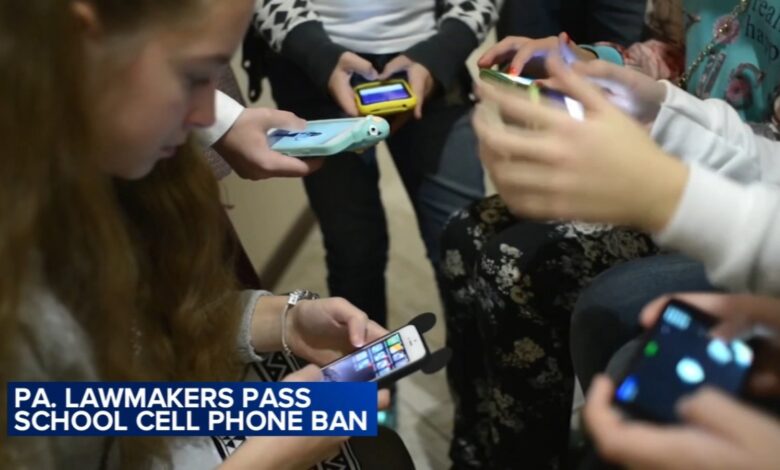
Pennsylvania is set to fundamentally shift the classroom environment following the passage of legislation that will mandate a statewide “bell-to-bell” cellphone ban in public schools. The new requirements, which will officially take effect in the 2027-28 school year, task every school district in the Commonwealth with developing specific plans to prohibit student use of mobile devices from the start of the first bell to the end of the final period.
Senator Vincent Hughes, a co-sponsor of the bill, characterized the move as a critical intervention for both academic achievement and student well-being. According to Hughes, cellphones have become one of the most pervasive obstacles facing educators today. By removing the devices from the equation, proponents believe schools can foster a more competitive academic environment while simultaneously addressing a growing crisis in student mental and behavioral health.
The push for the ban is heavily supported by educational advocates who argue that the constant pull of social media and notifications has eroded the quality of classroom instruction. Chris Lilienthal, communications manager for the Pennsylvania State Education Association, noted that the legislation is a necessary step toward reclaiming the classroom. He emphasized that the policy would allow teachers to do what they are trained to do—teach—without having to compete with personal screens for student attention. The goal is to ensure students are not only physically present in the room but mentally engaged with the curriculum.
Despite the broad mandate, the legislation outlines several critical exceptions where cellphone use would still be permitted. Districts must incorporate flexibility for students or immediate family members with documented medical conditions that require monitoring via mobile applications. Additionally, students learning English as a second language will be allowed to use devices for real-time translation services. Other carve-outs include students with Individualized Education Plans (IEPs) that specify the need for communication technology, and teachers who choose to integrate mobile devices into their lesson plans as instructional tools. Provisions are also expected for single-day special occasions.
The transition to a phone-free school day faces some pushback from those who view the devices as a safety lifeline. Michael Bayer, a parent, expressed a common concern among families who have grown accustomed to constant connectivity with their children. While acknowledging the distractions phones cause, Bayer stated that his primary concern remains the ability to reach his children directly and immediately in the event of an emergency. This sentiment was echoed by Kamiya Alexander, a junior at Bensalem High School, who noted that while she understands the need for restrictions during active class time, she feels students need access to their phones for emergencies.
Addressing these safety concerns, Senator Hughes noted that school districts are expected to design their implementation programs with sensitivity to the reality of parental anxiety. However, education officials have pushed back on the idea that personal phones enhance safety. Lilienthal argued that during actual emergency situations, cellphone use can actually exacerbate dangers by distracting students from official instructions and safety protocols. Educators pointed out that modern school districts provide students with school-issued laptops that can be used for communication and emphasized that the traditional school office remains the most reliable point of contact for parents during a crisis.
Alexander pointed out that current options like school-issued laptops or office phones are not always effective or immediate enough for students in high-stress situations. These conflicting views on safety and communication will likely remain a central point of discussion as districts begin the multi-year process of drafting their specific enforcement policies. Once the governor signs the bill, districts will have until the 2027-28 academic year to finalize and launch their respective cellphone restriction plans.