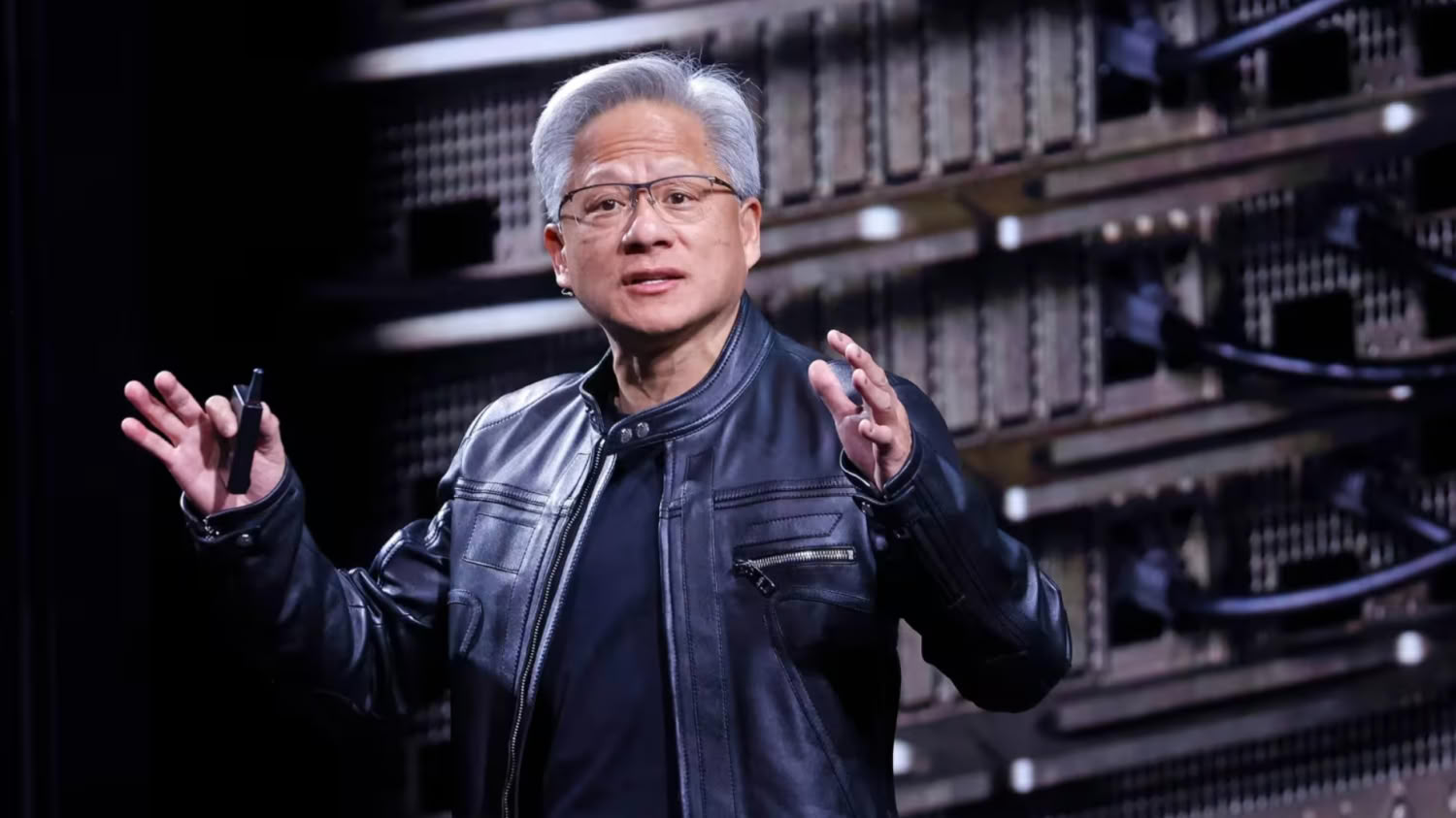
Nvidia is laying the groundwork to expand its enterprise software licensing business, pointing toward a potential model of roughly $2,000 per GPU annually to support complex artificial intelligence workloads. During an October 22, 2026, question-and-answer session, CEO Jensen Huang discussed how software authorizations could become a cornerstone of the company’s business as organizations shift toward deploying autonomous AI agents in data centers.
Unlike traditional conversational chat systems, AI agents are designed to execute multi-step tasks autonomously, invoking tools, accessing corporate data, and running programs within authorized limits. Deploying these systems at scale requires robust operational infrastructure, including advanced permission management, runtime monitoring, and security controls. To illustrate the financial scale of providing such infrastructure, Huang noted that if five million GPUs adopted a $2,000 annual software license, it could theoretically generate $10 billion per year, totaling $50 billion over a five-year span.
Company officials emphasized that this figure serves as a hypothetical pricing example rather than a confirmed corporate revenue forecast or an officially implemented commercial offering. Nvidia has not yet disclosed actual adoption numbers for this proposed tier, nor has it confirmed which specific products the price point will cover, when it might take effect, or what contractual conditions will apply.
This pricing model sits alongside Nvidia’s existing enterprise offerings, such as the NVIDIA AI Enterprise platform, which is tailored for corporate data centers and currently carries a one-year subscription fee of $4,500 per GPU with support services included, or $18,000 for a five-year commitment. Because the exact software bundles, authorization periods, and service levels associated with the newly floated $2,000 figure remain undefined, analysts and customers cannot yet draw a direct cost comparison.
Developing a recurring software subscription model allows Nvidia to diversify its revenue beyond cyclical hardware sales, which are tied heavily to data center construction cycles, customer procurement schedules, and semiconductor manufacturing capacity. By anchoring corporate workflows to its proprietary software platforms, the company aims to secure continuous financial returns from deployed chips long after the initial hardware purchase.
This strategic push into software and infrastructure management coincides with Nvidia’s broader security initiatives for autonomous systems. On October 21, 2026, the company introduced the OpenShell reference architecture, designed to provide a secure operational environment for AI agents. The framework integrates Nvidia’s Vera Rubin computing infrastructure, Vera CPU, and BlueField-4 data processors with a monitoring mechanism dubbed NVIDIA Sentry. OpenShell isolates AI agents to restrict their access to specific tools, data, and system resources, while Sentry independently oversees agent activity and intervenes if an agent attempts to breach established operational boundaries.
Industry partners are already building around this infrastructure. Anthropic is integrating OpenShell and BlueField hardware with its Claude Managed Agents to supply enterprises with enhanced runtime isolation and access controls. Meanwhile, Salesforce has developed the Slack Admin Bridge for OpenShell, enabling administrators to review, approve, or deny agent access requests and monitor activities directly within Slack.
Despite these integrations, the viability of a per-GPU software subscription model will depend heavily on enterprise customer adoption. While some businesses may willingly pay ongoing fees for guaranteed stability, security assurances, and technical support, others may turn to open-source alternatives or proprietary management tools from competing vendors. Furthermore, scaling software costs linearly with hardware deployment may lead clients to scrutinize contract terms, license scopes, and potential cost overlaps as they build out their artificial intelligence capabilities.