Lakers Face Early Depth Questions at Center as Rotation Options and Trade Landscape Take Shape

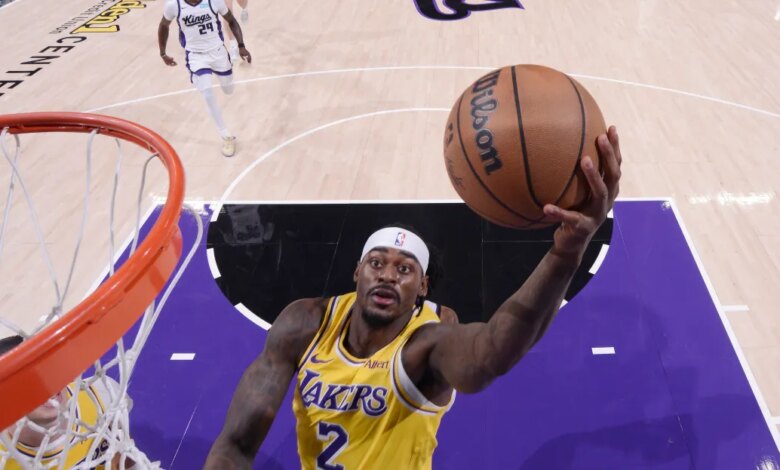
The Los Angeles Lakers have generated excitement with an unbeaten start to the new NBA season, but early performances have exposed a glaring weakness in the team’s roster construction: a severe lack of depth at the center position.
Kevon Looney has experienced a difficult opening stretch over the first three games, struggling to find his footing and remaining benched in the second half of the last two contests. With Looney appearing unplayable in most anticipated matchups, the team finds itself searching for a reliable backup big man to protect leads and sustain physical minutes.
Because NBA trade rules and team dynamics generally preclude major deals before December 15, the Lakers are forced to weigh internal solutions for the opening months of the season. Thus far, Sandro Mamukelashvili has stepped into the role as a floor-spacing smallball center, providing sufficient minutes while the coaching staff works to maximize those lineups.
At the same time, a growing segment of observers has pointed toward Jarred Vanderbilt as a potential internal option. Having spent the preseason buried on the bench, Vanderbilt finds himself in a slightly different tactical position than usual. Because he is not needed on the wing, his well-documented shooting limitations from beyond the arc would theoretically be less damaging in a five-out offensive scheme, while his established strengths as a rebounder could provide a boost.
However, skeptics note that Vanderbilt’s offensive shortcomings extend beyond perimeter shooting. His persistent inability to finish effectively around the rim turns him into an offensive liability, allowing opposing defenses to sag off him and disrupt floor spacing. While an argument can be made for giving him an opportunity given the current personnel crunch, his offensive profile risks recreating the exact spacing issues the team is trying to avoid.
External solutions present their own set of complications. Exploring the overseas market for midseason reinforcements is rarely fruitful, as players relocating to Europe or Asia at this stage of their careers typically do so when viable NBA interest has evaporated. Past comparisons, such as Kendrick Nunn and Talen Horton-Tucker thriving abroad after difficult NBA stints, illustrate a significant talent drop-off that makes European leagues an impractical destination for immediate roster upgrades.
Looking toward potential trade paths, the front office faces questions regarding how aggressively to pursue external help. Contending teams across the league are already monitoring frontcourt availability as injuries affect rotations elsewhere. While the urgency may not yet have reached a critical threshold—especially with players like Jalen Duren and Joel Evbiid experiencing only short-term absences—the market for available big men remains tight.
Among the names circulating as monitors for the Lakers are Jericho Sims, who remains outside the rotation in Milwaukee despite reports of a second-round pick asking price, and Karlo Matkovic, who was previously linked to the franchise and sits on the fringes of the rotation in New Orleans. Additionally, the team could explore two-way contracts to secure spot minutes, a lower-risk avenue that has yielded success for the franchise in recent years.
Beyond the center position, other tactical adjustments continue to draw scrutiny. Center Kessler has earned praise for his athletic role as a lob threat, though expectations for an expanded post-up game remain low as his responsibilities are streamlined to rolling and finishing at the rim. Meanwhile, the integration of new guard additions alongside usage-heavy creators like Luka Dončić and Austin Reaves remains a work in progress as the coaching staff figures out optimal rotations.