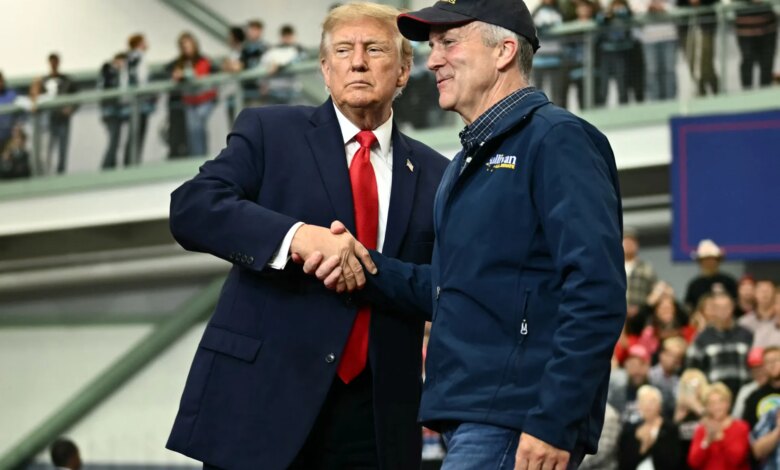
With little more than a week remaining before the high-stakes 2026 midterm elections, the United States Department of Justice has moved to block the certification of Alaska’s U.S. Senate race. In a federal lawsuit filed Thursday, the Justice Department argued that the presence of an independent candidate with the same name as the Republican incumbent, Senator Dan Sullivan, represents a deliberate effort to confuse the electorate.
The lawsuit focuses on Daniel J. Sullivan, an independent candidate who shares a name with the sitting senator currently seeking re-election. Federal prosecutors contend that the naming similarity creates a “substantial likelihood” of distorting the will of Alaskan voters. The filing claims that certifying an election under these conditions would result in a process that “lacked integrity.”
In its filing, the Trump administration has asked a federal judge to delay the formal certification of the results to provide time for an investigation. The proposed probe would attempt to determine whether votes cast for the independent Daniel J. Sullivan were actually intended for the incumbent Republican senator. The move comes as the race for the seat, contested primarily between Senator Sullivan and former Democratic Congresswoman Mary Peltola, has become one of the most closely watched contests in the country.
The federal intervention has sparked immediate pushback from voting rights advocates and Democratic critics, who view the lawsuit as a potential attempt to interfere in an election where Republicans face significant challenges. Lauren Miller Karalunas, senior counsel at the Brennan Center for Justice, emphasized that the federal government traditionally has no authority over the certification of election results, which is a power reserved for the states.
“Rest assured, state certification processes were created to meet this moment,” Karalunas said in a statement. She noted that state legislatures established these safeguards centuries ago specifically to prevent “bad actors” from manipulating outcomes through the certification process.
This legal action is the latest in a series of controversial moves by the Justice Department involving Democratic figures and critics of the administration. On Wednesday, the agency announced public corruption charges against Virginia State Senator L. Louise Lucas. Additionally, federal officials have launched an investigation into Democratic Representative Ilhan Omar over allegations related to immigration fraud. Both Lucas and Omar have dismissed the actions as politically motivated.
Addressing concerns regarding election interference, U.S. Attorney General Todd Blanche told reporters on Wednesday that the agency does not intend to disrupt the state certification process unless extreme circumstances occur. “It is not DOJ’s intention to – and it’s never our intention to – improperly interfere with elections or the state certification process,” Blanche said during the announcement of the Lucas indictment.
The naming dispute in Alaska is not a new development. In June, the Alaska State Supreme Court rejected a Republican-led effort to have the independent Daniel J. Sullivan removed from the ballot. Under current state rules, the incumbent will be listed on the ballot as the Republican candidate, while the independent challenger will appear without a party designation next to his name.
Further complicating the tally is Alaska’s ranked-choice voting system. Under this model, voters have the ability to select multiple candidates in order of preference. Critics of the lawsuit suggest that the system itself allows voters who are confused by the identical names to mark both candidates as a safeguard, potentially mitigating the very confusion the Justice Department cites as a basis for its lawsuit.
The outcome of the Alaska race is viewed as a potential tipping point for control of the U.S. Senate. Polling suggests the contest is a statistical dead heat. A survey released earlier this month by Public Policy Polling showed Peltola holding a narrow one-point lead over the incumbent, well within the margin of error. As of Thursday evening, representatives for the Peltola campaign and both Sullivans had not provided comment on the federal filing.