Israelis began voting on Tuesday in a high-stakes national election that serves as a profound referendum on the country’s direction and the long-standing leadership of Prime Minister Benjamin Netanyahu. This marks the first time the nation has headed to the polls since the devastating Hamas attacks on October 7, 2023, an event that reshaped the region’s security landscape and fractured the Israeli public’s trust in its institutions.
By midday, voter turnout had reached its highest level since 1977, with more than 31% of the eligible electorate having already cast their ballots. The Central Elections Committee reported that over 7 million people are eligible to vote, including tens of thousands of citizens who reportedly flew in from abroad specifically to participate in what is widely viewed as a watershed moment for the state.
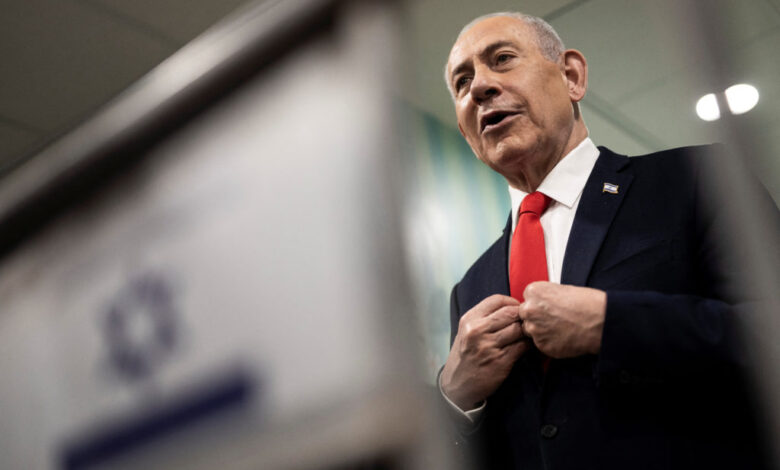
Prime Minister Netanyahu, the country’s longest-serving leader, cast his vote shortly after noon. Facing a formidable challenge from a coalition of opposition parties, Netanyahu characterized the moment as “fateful.” He expressed concern over the high turnout among Arab-led parties, suggesting their supporters were heading to the polls in “unprecedented numbers” and could potentially dismantle his governing coalition. He urged his base to prioritize the ballot box over leisure activities, telling supporters to skip the beach and the barbecue to secure his political future.
His primary challenger, former military chief Gadi Eisenkot, began his day with a visit to the southern communities that bore the brunt of the October 7 massacre. Eisenkot, whose own family has been personally touched by the ensuing war—losing a son and two nephews in the fighting in Gaza—framed the election as a choice between a functional government and what he termed “the worst government Israel has known.” He called the day perhaps the most critical since the founding of Israel in 1948.
In Tel Aviv, the emotional weight of the day was palpable as families of those killed on October 7 and former hostages observed moments of silence. Yona Adam, whose daughter Mapal was killed in the attacks, reminded the public to “remember all those whose voices are no more.” The election also sees the entry of approximately 330,000 first-time voters, many of whom are entering the voting booth while either serving in or preparing for compulsory military service during an active conflict.
The political landscape remains deeply fragmented. In Israel’s parliamentary system, no single party has ever secured an outright majority, and this election appears no different. If neither Netanyahu’s religious and ultranationalist bloc nor the opposition coalition led by Eisenkot can secure a 61-seat majority, the country could face weeks of grueling negotiations or even further political deadlock.
Arab-led parties, representing roughly 20% of the population, could emerge as kingmakers if they are willing to join a governing coalition. Mansour Abbas, head of the Islamist Ra’am party, expressed hope for a turnout exceeding 70% in Arab communities, stating that their votes have the power to change the government. Conversely, far-right National Security Minister Itamar Ben-Gvir warned his supporters that failure to secure a right-wing victory would result in a government effectively controlled by Abbas.
The campaign has not been without friction. In Kiryat Shmona, a northern town and traditional Netanyahu stronghold near the Lebanese border, tensions boiled over as a man was seen tearing down posters of Eisenkot. Meanwhile, Eisenkot’s Yashar party filed an urgent complaint with election officials, alleging that ballot slips were missing or intentionally damaged in several locations, suggesting a coordinated attempt at sabotage.
Beyond the personalities of the candidates, the election is a battle over the soul of the country. Supporters of Netanyahu view him as a master statesman and the only leader capable of navigating Israel through existential threats, including ongoing tensions with Iran. Netanyahu bolstered this image leading up to the vote, warning Tehran of a “devastating blow” should it attempt to strike Israel.
However, his detractors argue that Netanyahu is a polarizing figure whose focus on his own legal troubles and judicial reforms has weakened the nation’s democratic foundations and international reputation. A central point of contention in the campaign has been the issue of military conscription, specifically the exemptions granted to ultra-Orthodox men. Voters like Nisso Shitrit in Jaffa noted that the election is fundamentally about “who serves and who evades service,” reflecting a growing frustration with the burden of military duty during a time of war.
As the sun sets on a day of historic turnout, the focus shifts to whether the results will provide a clear path forward or lead to further domestic instability. The next government will be tasked with resolving the ongoing conflicts in Gaza and along the northern border, mending strained relations with international partners, and addressing the deep-seated internal rifts that the October 7 tragedy only served to widen.