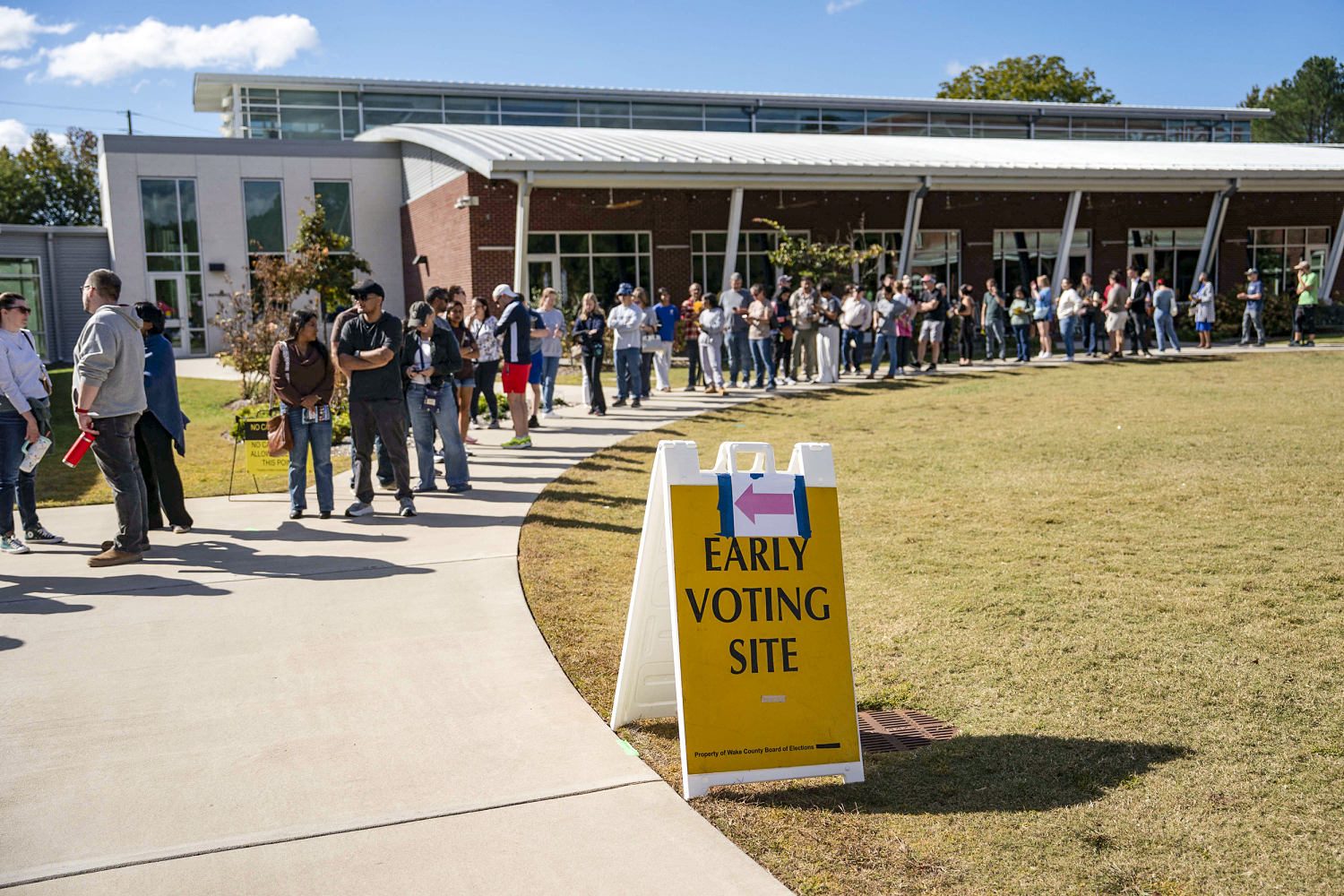
With the midterm elections reaching their conclusion in just four days, political reporters and campaign teams are fanatically tracking the shifting dynamics across the nation’s most competitive battlegrounds. In Ohio, the fallout from a controversial gubernatorial campaign ad featuring Republican nominee Vivek Ramaswamy and the estranged mother of his Democratic opponent, Amy Acton, has provided a significant galvanizing moment for Democrats. A private poll commissioned by a Republican group showed Ramaswamy trailing Acton by 8 percentage points, marking a 6-point drop from an earlier survey, according to a GOP strategist involved in Ohio races. Although the ad has since been pulled following bipartisan backlash, political observers are questioning whether it might create a downstream drag for other Republicans on the ballot, including Sen. John Husted, who was appointed to the seat previously held by Vice President JD Vance and is facing former Sen. Sherrod Brown.
In Michigan, the Senate race between Democrat Abdul El-Sayed and Republican Mike Rogers has grown increasingly bitter. During a campaign event for Rogers, Sen. Ted Cruz, R-Texas, launched sharp attacks against El-Sayed, who would become the first Muslim senator if elected, labeling him a “theocratic zealot” and a “jihadist leprechaun.” Cruz argued that El-Sayed’s election would endanger American service members by exposing them to security risks, while echoing Republican messaging attempting to link the Democrat to the Muslim Brotherhood—an organization El-Sayed has publicly condemned. The rhetoric has become a staple of anti-El-Sayed messaging in advertising and campaign events across the state.

Meanwhile, in the Southern battleground of Georgia, the gubernatorial contest between Democrat Keisha Lance Bottoms and Republican Rick Jackson remains tightly contested. Both candidates are aggressively courting voters who are supporting Democratic Sen. Jon Ossoff, who holds a sizable lead over Republican challenger Rep. Mike Collins in separate polling. Bottoms has actively campaigned alongside Ossoff, while Jackson has distanced himself from staunch alignment with President Donald Trump, a shift from his strategy during the GOP primary.
Further north in New Hampshire, Republican Senate candidate John E. Sununu is attempting to carve out distance from Trump in a state the president lost across three presidential runs. Sununu released a direct-to-camera television ad emphasizing his independence, telling voters he has never even met the former president. On the airwaves nationally, advertising analyses reveal a sharp divide in closing strategies: Democratic Senate candidates are leaning heavily into messaging concerning corruption, high costs, and Trump, while Republican campaigns are concentrating on immigration, crime, and transgender issues.

In Texas, Trump’s endorsement power faces a major test. Despite early GOP reservations, Trump backed state Attorney General Ken Paxton over Sen. John Cornyn in the primary runoff, leading to hundreds of millions of dollars in defensive spending by Republicans. If Democratic challenger James Talarico succeeds in flipping the seat, it would mark the first time Democrats have won a Texas Senate seat in more than three decades. Trump has made three trips to the Lone Star State this month alone.
Control of the upper chamber could ultimately hinge on Alaska, where ranked choice voting and pre-emptive legal challenges threaten to draw out election results for weeks. State and federal investigations were launched following reports regarding Democratic operatives allegedly recruiting a secondary candidate named Dan Sullivan to siphon votes from the incumbent Republican bearing the same name. Democrat Mary Peltola and her campaign have denied any involvement in the recruitment effort, while Alaskan voters are also set to decide whether to retain their ranked choice voting system.