California Gubernatorial Race: Hilton and Becerra Clash Over Sweeping Homelessness Reform Plans

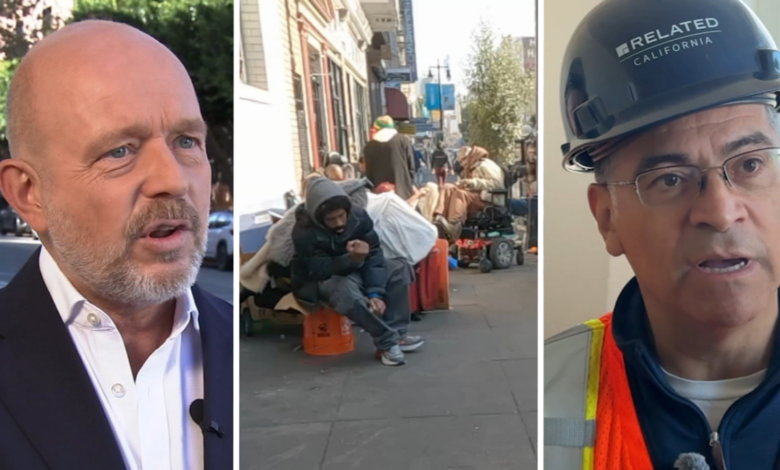
As the 2026 California gubernatorial race intensifies, the state’s most visible and persistent challenge—homelessness—has emerged as a central ideological battleground. Republican candidate Steve Hilton and Democrat Xavier Becerra have laid out fundamentally different roadmaps for addressing a crisis that currently sees roughly 180,000 Californians living without permanent shelter.
Hilton has staked his campaign on an ambitious and controversial pledge: to effectively end “mass homelessness” within his first year in office. Speaking in a recent interview, Hilton clarified that while his goal does not necessarily mean the total elimination of homelessness, it does mean the removal of the sprawling encampments that have become permanent fixtures in cities like San Francisco, Los Angeles, and San Diego. He described the reduction of these encampments as not merely possible, but essential for the state’s recovery.
The cornerstone of Hilton’s proposal is the establishment of a statewide network of approximately 30 large-scale recovery centers. These facilities, designed to accommodate up to 5,000 people each, would provide a combined capacity for 150,000 individuals. Hilton envisions these centers as temporary shelters that offer a comprehensive suite of services, including mental health treatment, addiction recovery, and job training. He pointed to unused federal military land near Marine Corps Air Station Miramar in San Diego as a potential model for these sites, noting that discussions with federal officials and project stakeholders are already in progress.
Hilton’s plan represents a radical departure from California’s long-standing “Housing First” policy, which prioritizes placing individuals in permanent housing before requiring participation in treatment or sobriety programs. Hilton argues that the current approach is failing and proposes redirecting billions of dollars in existing state funding toward his recovery-center model. Furthermore, he has called for an end to harm reduction programs, such as sterile syringe distribution and methadone access, characterizing them as taxpayer-funded incentives for drug use. For Hilton, the ultimate metric of success is a “steady job,” though he admits that reaching that milestone could take years for some individuals.
In contrast, Xavier Becerra, the former U.S. Secretary of Health and Human Services and the current Democratic frontrunner, is emphasizing prevention as the most effective tool in the state’s arsenal. During a recent affordable housing event in the East Bay, Becerra argued that keeping people in their homes after financial or medical emergencies is far more cost-effective than attempting to rehabilitate them once they have fallen into the homelessness cycle.
Becerra’s platform focuses on accountability for the billions of dollars already allocated to the crisis. He has pledged to implement a strict “scale up or shut down” policy for organizations receiving state funds. Under this system, successful programs would see increased investment, while those failing to produce measurable results would lose their funding. While Becerra has not committed to a specific numerical target for his first year, he maintains that a results-oriented approach is necessary to restore public trust in state spending.
Despite their differences, both candidates have moved toward a more aggressive stance on encampment enforcement. Becerra has called for clearing camps provided that displaced individuals are given access to temporary shelter and mental health services. Hilton, meanwhile, stated that while he prefers voluntary cooperation, he would fully support law enforcement intervention for those who refuse assistance once the recovery centers are operational.
The urgency of the debate follows a critical 2024 state audit that found California has been inconsistent in tracking the outcomes of its homelessness spending. The audit revealed that it is currently difficult to determine if the massive public investment has produced significant results. This lack of transparency has become a primary talking point for Hilton, who blames “one-party rule” for a lack of pressure to deliver tangible improvements.
Current data suggests the scale of the problem remains immense, despite a slight 3% decline in the unhoused population since 2024. Public sentiment also appears to be shifting; while 80% of Californians remain concerned about the issue according to a Public Policy Institute of California survey, the percentage of those who are “very concerned” has dropped from 60% in 2019 to 37% today. Hilton has vowed to meet with mayors during his first week in office to set firm timelines for clearing the streets, signaling that the next administration will face immediate pressure to solve what has become California’s most defining policy failure.