In the immediate wake of Brazil’s presidential runoff, a coordinated effort has emerged among American political influencers to frame the victory of leftist Luiz Inácio Lula da Silva as a blueprint for institutional fraud. The rapid pivot from Brazilian results to American warnings suggests that the rhetoric surrounding international elections is being used as a staging ground for election denialism ahead of the Nov. 3 U.S. midterm elections.
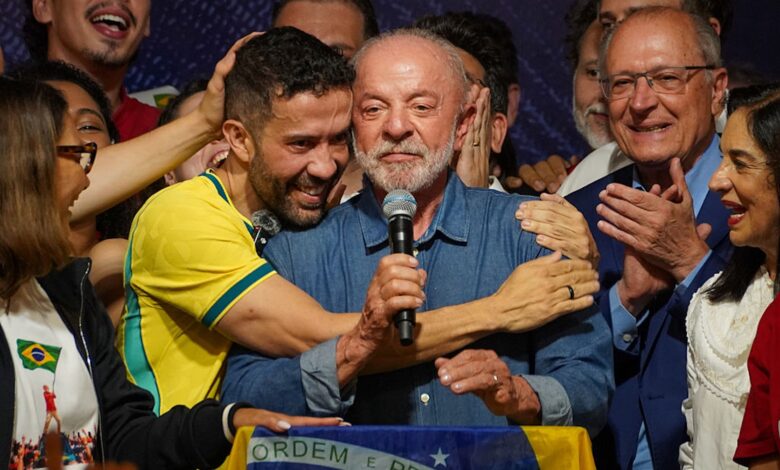
On Sunday, Lula da Silva secured a historic victory, overcoming a first-round deficit to defeat Senator Flávio Bolsonaro, the son of former right-wing president Jair Bolsonaro. The win marked the first time since Brazil’s 1985 return to democracy that a candidate trailing after the first round successfully staged a runoff comeback. It also elevated Lula to the status of the first person elected to the Brazilian presidency four times. However, before the official results were even fully processed, a network of American political figures began casting the outcome not as a democratic decision, but as a scripted maneuver by shadowy forces.
Conservative strategist and podcaster Steve Bannon was among the first to link the South American results to the domestic U.S. political landscape. On his media program, Bannon characterized the Brazilian election as a warning, claiming that unless immediate action was taken, the same scenario would play out in the United States “next Tuesday.” The goal of this rhetoric appears focused on convincing a domestic audience that democratic institutions have been compromised globally, making standard voting results suspect unless they favor specific ideological outcomes.
Central to the allegations of fraud is a two-hour voting extension ordered on Sunday by Supreme Court Justice Cristiano Zanin. The extension was prompted by severe weather and significant transportation disruptions across the country. Critics of the result have focused heavily on Zanin’s professional history, noting his previous service as Lula’s personal lawyer. Figures such as Jack Posobiec labeled the ruling as an unprecedented intervention by a judge loyal to the winning candidate.
However, the narrative of a “rigged” extension omits critical procedural context. Both the Lula and Bolsonaro campaigns had requested more time at the polls. Lula’s representatives cited bus delays in urban centers where his support is high, while Bolsonaro’s campaign pointed to flooding in rural regions that were expected to favor the incumbent’s son. Furthermore, the statistical impact of the extension was marginal. In an election decided by a margin of roughly 4.4 million votes, early data indicates that fewer than 40,000 ballots were cast during the additional two-hour window. Despite these figures, high-profile figures including Elon Musk suggested to millions of followers that the mathematics of the count remained questionable.
Before the polls closed, the narrative of an inevitable right-wing victory was fueled by on-the-ground reports from influencers like 24-year-old YouTuber Nick Shirley. Having traded his usual Minnesota-based content for a seat on the Bolsonaro campaign bus, Shirley reported to his followers on Saturday that the energy of the crowds and the volume of anti-Lula chants were proof of a starting revolution. When the actual vote count favored Lula the following day, the narrative shifted from enthusiastic momentum to claims of corruption and systemic meddling.
Donald Trump also weighed in on the results from Joint Base Andrews. While preparing to travel to a rally for Senator Cindy Hyde-Smith, he told reporters that the Brazilian contest “frankly” looked like another rigged election. Despite his claims of neutrality, the former president offered no evidence to support the allegation of systemic fraud. Following this initial signal, Jair Bolsonaro effectively conceded the race, backing away from calls to annul the results while maintaining that “the system won” rather than the voters. He indicated his intention to sue the Lula campaign for abusing the power of incumbency and vowed to use the conservative-held legislature as a “fortress” against the new administration.
The ideological and personal connections between the American MAGA movement and the Bolsonaro family have been fostered over several years. Senior advisers such as Jason Miller and organizations like the Conservative Political Action Conference (CPAC) have worked to establish a presence in South America, hosting summits that blend local nationalism with American-style culture war rhetoric. Mar-a-Lago has also functioned as a meeting point for these international allies. When the elder Bolsonaro faced legal scrutiny in Brazil, his U.S. allies treated the development as a precursor to their own legal and political challenges at home.
This trend has seen various figures, from Michael Flynn to Kari Lake, drawing direct parallels between Brazil’s election and contested U.S. races. Flynn characterized the nation as a “banana republic,” while Lake compared the Brazilian voting process to the 2022 and 2024 elections in Arizona. Underlying this talk is a belief among some segments of the American right that the dismantling of certain international aid structures had previously crippled the left’s machinery in Latin America, a claim that ignores the long history of right-wing governance and local opposition to U.S. involvement in the region.
By framing visible crowd sizes as the only true measure of legitimacy and dismissing actual ballot counts as fraudulent, these influencers are preparing their audiences for a rejection of any unfavorable U.S. midterm results. House Minority Leader Hakeem Jeffries recently cautioned that these efforts represent an announced strategy to challenge the integrity of the upcoming Nov. 3 elections, transforming foreign developments into domestic political weapons.