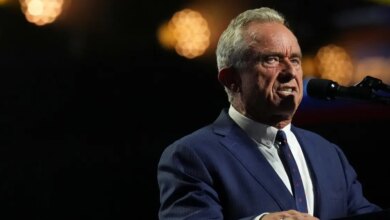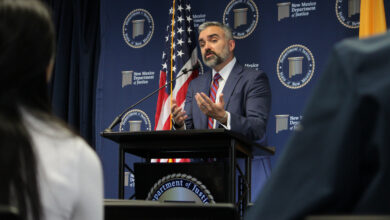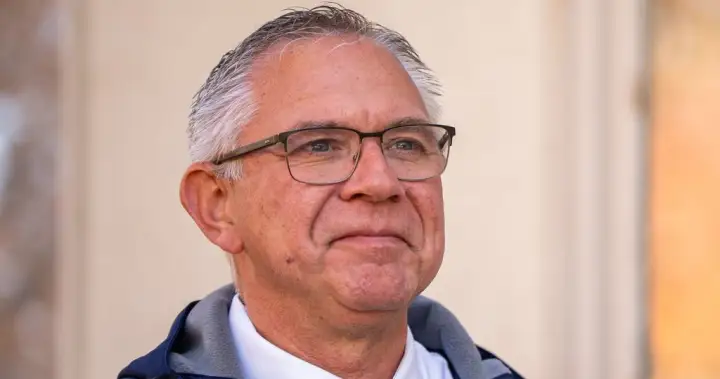
The British Columbia Conservative Party, led by Lorne Doerkson, is projected to win a majority government in a dramatic political shift that upended the province’s leadership after a snap election called by outgoing Premier David Eby.
Only about 50 minutes after polls closed at 8 p.m. on Saturday, a majority projection was announced. Needing 47 seats to secure a majority, the BC Conservatives are poised to win roughly 60 seats in the legislature. Stepping up to the podium on election night, Doerkson addressed supporters by declaring that British Columbia is definitely blue.
“Together, we seized this opportunity, you guys, and together we voted for a better British Columbia,” Doerkson said. “And from here, I will do everything in my power to get British Columbia back on track.”
Doerkson thanked his family and supporters before recognizing Eby and Green Party leader Emily Lowan. He acknowledged the personal demands of public life and thanked Eby for his years of service to the province. He also congratulated Lowan on her campaign, noting her ability to inspire thousands of young British Columbians to engage in politics. Emphasizing his statewide ambitions, Doerkson said many residents had long felt forgotten by Victoria, but insisted that the entire map counts.

Detailing his economic platform, Doerkson pledged to supercharge the province by treating it as a single interconnected economy. His policy goals include cutting red tape, doubling natural gas production by 2032, and tripling it by 2035. He also promised a $1,000 tax cut as a starting point with no new taxes, alongside fully and publicly funded health care that ensures rural emergency rooms and maternity wards remain open.
Federal figures also weighed in on the transition. Mark Carney offered congratulations to Doerkson on social media, stating he looked forward to working together to build homes, boost energy potential, and strengthen both the province and the country.

The election results brought significant changes to prominent individual ridings. Eby is projected to win his own riding of Vancouver-Point Grey, while Lowan is projected to win in Saanich North and the Island. However, other party leaders faced defeats; OneBC leader Dallas Brodie is projected to lose her riding of Vancouver-Quilchena to BC Conservative candidate Carson Binda, and CentreBC leader Elenore Sturko is projected to lose her former seat in Surrey South to BC Conservative candidate Megan Knight.
In a concession speech on Saturday night, Eby announced his resignation as BC NDP leader. He confirmed he had spoken with Doerkson to wish him success and express hope that the incoming administration would protect and care for the province. Eby acknowledged that while forming the official opposition was not the outcome his party wanted, it was the mandate delivered by voters.

“It has been the honour of my life to serve as premier of British Columbia, to serve as MLA, to work with all of you,” Eby told his staff and supporters.
The swift realignment follows a turbulent political period in British Columbia. Eby called the snap election on September 22, setting the vote for October 24—just one week after municipal elections—arguing that economic and sovereignty challenges demanded stability. When the campaign began, the BC Conservatives had recently emerged from internal turmoil. On September 20, Kerry-Lynne Findlay resigned as party leader after 13 MLAs left or were ousted following a turbulent period that followed the 2024 election, where the Conservatives narrowly missed an outright win and reduced the NDP to a slim one-seat majority.
Following Findlay’s departure, Doerkson took over leadership, welcoming back nearly all of the departing MLAs except for Sturko, who formed CentreBC. By the final week of the campaign, a new poll showed the BC Conservatives leading by five points among decided voters, capitalizing on voter fatigue regarding the cost-of-living crisis, health-care access, street disorder, the toxic drug crisis, housing pressures, and a large provincial deficit accumulated under the NDP government that had been in office since 2017.
Political analysts viewed the contest as a quintessential change election, pitting the NDP’s emphasis on experience and policy continuity against a resurgent conservative movement. With Doerkson’s victory, the province has experienced only the seventh swap of party rule in modern history where one majority government is decisively replaced by another since 1952.