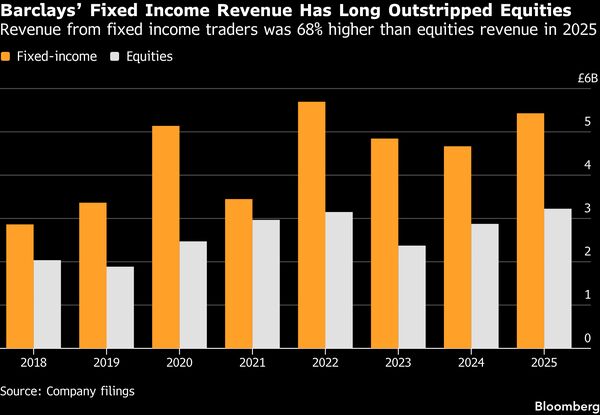
Long recognized as a powerhouse built on fixed income, Barclays Plc is executing a strategic overhaul to expand its equities division and diversify its revenue streams. In a milestone achievement following the 2008 acquisition of Lehman Brothers’ North American investment bank, Barclays’ equities traders pulled level with their fixed income counterparts during the third quarter.
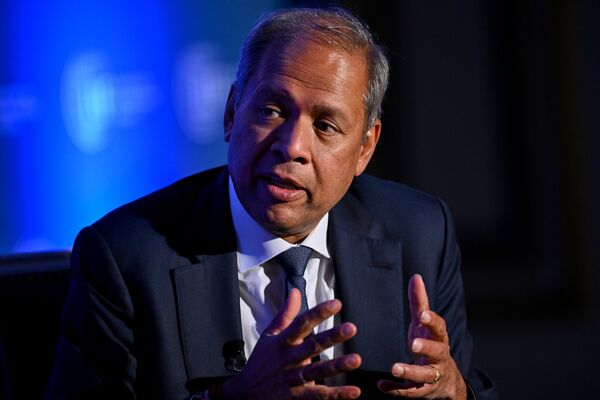
Chief Executive Officer CS Venkatakrishnan addressed the shift during an earnings call, stating that the institution is actively rebalancing toward equities. The growth has been largely catalyzed by a boom in prime brokerage, the specialized business responsible for financing and providing services to hedge fund clients. Volatile rallies and sharp selloffs in Asian semiconductor stocks specifically propelled demand from hedge funds seeking increased bank funding.
The strategic shift comes as Barclays aims to create a more balanced operational model where its equities business can pick up the slack if bond trading slows, and vice versa. Continued growth in equities would firmly cement Barclays among the largest European-based trading houses, putting it alongside lenders such as BNP Paribas SA and UBS Group AG.
The equities gains arrived at a crucial time to offset broader headwinds in debt markets. Revenues across Wall Street fixed income desks declined during the quarter as elevated interest rates, exacerbated by an additional rate hike from the US Federal Reserve, stifled client demand. Chief Financial Officer Anna Cross noted that the equities results helped offset lower client activity in rates and credit during the back half of the third quarter, alongside further adversity in September that pulled fixed income revenue down 19% from a year prior.
European government bonds have struggled in recent months, with traders caught on the wrong side of sharp market moves as yields hit multidecade highs amid ongoing conflict in the Middle East and rising fiscal and inflation risks. Other European lenders are navigating similar dynamics; BNP Paribas and UBS have reported large surges in equities revenue in recent quarters, while Deutsche Bank AG relies exclusively on fixed income earnings.
Barclays’ third-quarter equities surge notably surpassed the 43% average increase recorded across US peers, according to an analysis by JPMorgan Chase & Co. analysts including Kian Abouhossein. Shore Capital analyst Gary Greenwood observed that while equities growth was exceptionally strong compared to fixed income, the trend was largely sector-wide.
Historically, the bank’s identity has been anchored in debt trading. Following the 2008 Lehman Brothers acquisition out of bankruptcy, fixed income, currencies and commodities revenue dwarfed equities, bringing in nearly £13 billion in 2009 compared to £2.8 billion from equities and prime services. Although the firm’s investment bank subsequently shrunk, fixed income remained the dominant source of markets revenue.
Since taking the top job in 2021, Venkatakrishnan has focused on expanding prime capabilities, describing the division in a 2022 earnings call as rewarding and noting tremendous growth in balances. In recent months, Barclays diverted capital from macro traders to its prime business after hitting certain capacity limits on financing hedge funds.