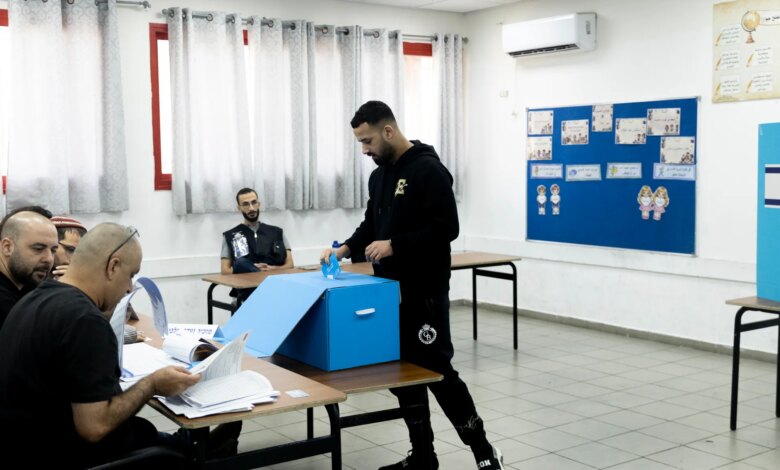
Arab-led political parties are projected to capture 18 seats in the Israeli parliament following an election marked by record-breaking voter turnout among Palestinian citizens of Israel, according to exit polling data released on Tuesday. The surge in participation brings the leading Arab-led factions, the Joint List and Ra’am, toward a historic high-water mark within the 120-member Knesset.
Early indicators reported by Israel’s Channel 12 showed that voter turnout in Palestinian-Israeli communities reached approximately 80 percent, shattering previous participation records set in 1999. Overall national turnout also surged to 77.7 percent, according to figures released by the Central Elections Committee. Palestinian citizens account for roughly 21 percent of Israel’s population of 10 million and have historically participated at lower rates than Jewish Israelis.
Updated exit polling from Tuesday’s vote placed the opposition bloc led by former Israeli military chief of staff Gadi Eisenkot’s Yashar party in a tie with Prime Minister Benjamin Netanyahu’s Likud party, with each side projected to win 51 seats. With neither main bloc securing an outright majority, smaller factions hold potential kingmaker status.
Ra’am leader Mansour Abbas expressed hope that final tallies would allow the anti-Netanyahu bloc, which includes his party, to reach the 61-seat threshold required to form a governing coalition. Abbas, whose party currently holds five seats and previously participated in the 2021-2022 governing coalition, noted that both major political blocs reached out to his party before and after the election.
Forming a government may prove complicated for Jewish-led opposition factions that previously pledged during campaigning against forming coalitions with Arab parties. Alon Pinkas, a former Israeli ambassador, noted that parties unwilling to include Arab lawmakers will face political hurdles, observing that Arab lists will make demands that traditional coalitions may struggle to accommodate.
Ahead of the vote, Prime Minister Netanyahu and his far-right coalition made concerted efforts to mobilize their base by warning of the high turnout among Palestinian citizens. Witnesses reported that vehicles flying Likud party flags drove through Jerusalem broadcasting the Islamic call to prayer while urging supporters to vote because Arab citizens were heading to the polls. Netanyahu also highlighted long queues at polling stations in Arab communities on social media, warning supporters against the prospect of a government influenced by Mansour Abbas and Ahmad Tibi.
Arab politicians denounced the prime minister’s final-day campaign tactics as racist and inflammatory. Despite past disillusionment and systemic challenges, analysts noted that many Palestinian citizens who previously boycotted elections turned out in force to challenge perceived discrimination and seek political influence through the ballot box.