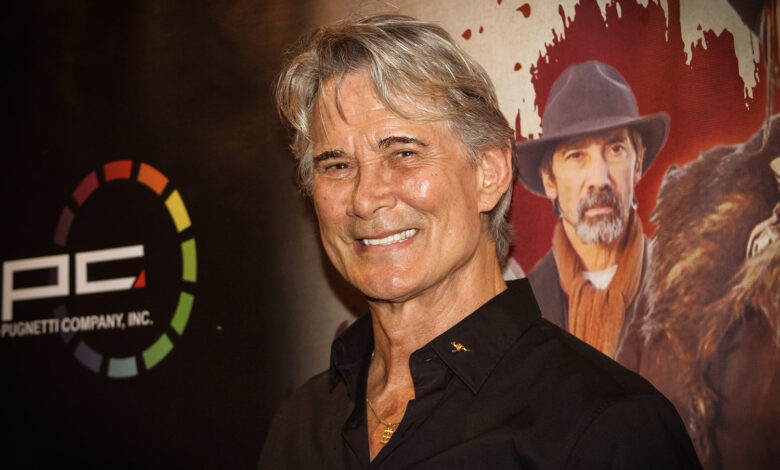
Australian actor and martial artist Richard Norton, renowned for his screen battles against action icons Chuck Norris and Jackie Chan and for training Hollywood stars, died last year from a heart attack triggered by doubling his prescribed peptide dosage, a coroner’s report has concluded.
Melbourne-based coroner David Ryan determined in a report filed in the Coroners Court of Victoria that Norton’s March 30, 2025, death “was triggered by his injection” of peptides. The 75-year-old actor had been taking amounts of the medication in excess of what his medical practitioner prescribed, according to the findings.

Two days before he died, Norton informed a nurse at his doctor’s office that he had been administering double the prescribed dose of CJC1295 and Ipamorelin. The nurse advised him that starting the following week, he should return to the proper dosage. The tragedy appears to mark the first confirmed fatality in Australia linked to unapproved peptides.
Peptides are small proteins heavily promoted across digital platforms by online influencers as remedies for faster healing, younger skin, improved sleep, and longevity. Beyond his on-screen combat roles, Norton built an extensive career training high-profile actors including Ben Affleck, Tom Hardy, Scarlett Johansson, and Margot Robbie, and previously worked as a bodyguard and stuntman for music legends David Bowie and Stevie Nicks.

Norton initially consulted Dr. Jerzy Muchnicki on March 11, 2025, while recovering from shoulder surgery, complaining of pain and fatigue and expressing interest in peptide therapy. He acknowledged that another practitioner had previously prescribed peptides for similar symptoms. After reviewing his medical history, Muchnicki discussed the experimental nature of the treatment and potential risks. Norton signed a consent form before the prescription was issued.
By March 25, Norton reported feeling well and noted that the therapy was improving his symptoms. However, on March 28, Norton called the clinic to report that he had dropped and broken a vial of CJC1295 and Ipamorelin, requesting a replacement. He told the nurse he was experiencing better sleep, reduced pain, and increased exercise capacity without side effects. The nurse consulted Muchnicki by phone, and the doctor authorized a replacement vial.

That same evening, Norton’s wife, Judy Green, called the clinic to report that after administering a second dose, her husband complained of feeling hot and flushed before collapsing and becoming unresponsive. He was rushed to a hospital and died two days later. Medical findings indicated the injection caused an anaphylactic reaction that led to cardiac arrest.
The coroner’s report faulted Muchnicki for authorizing the extra dosage on March 28 without checking the nurse’s clinical records, which documented that Norton had been dosing the medication incorrectly. The physician was also criticized for failing to speak directly with Norton to confirm appropriate usage or assess potential misuse and adverse effects.

Muchnicki has accepted accountability for his actions, apologized for his errors in judgment, and stated he will no longer prescribe peptides. Coroner Ryan recommended that Australia’s Therapeutic Goods Administration implement stricter regulations on unapproved peptides.
In the United States, certain peptides are utilized in FDA-approved medications for conditions such as diabetes and obesity. However, a thriving gray market has introduced unapproved peptide products promoted heavily online. Meanwhile, federal health officials recently authorized compounding pharmacies to begin producing six widely discussed peptides—BPC-157, epitalon, KPV, MOTS-c, semax, and TB-500—despite conclusions from FDA scientists that insufficient data exists to prove their safety and effectiveness.