BEIJING — China’s top political leadership and a cohort of approximately 300 elite officials have convened in the capital for a four-day meeting focused on tightening discipline within the ruling Communist Party. The gathering, known as the fifth plenum, began on Monday and is being closely watched as a bellwether for the country’s future policy direction and long-term leadership stability.
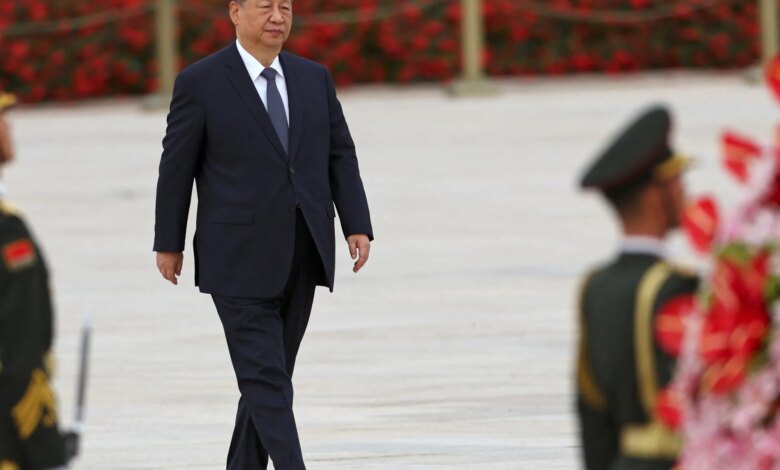
At the center of the agenda is the advancement of a policy framework described by state officials as “full and rigorous party self-governance.” The closed-door session of the Central Committee arrives roughly one year before President Xi Jinping is widely expected to secure an unprecedented fourth five-year term as party leader. The meeting serves as a critical venue for Xi to reinforce his authority and ensure that the next generation of party cadres is fully aligned with his vision of national security and economic development.
While Xi has spent more than a decade consolidating power, recent official communications suggest he remains dissatisfied with the level of compliance within the ranks. In a speech released ahead of the plenum, the President signaled a renewed focus on purging “two-faced” officials. He characterized these individuals as cadres who appear to follow Beijing’s directives in public while “inwardly resisting” them, pursuing individual interests, or behaving as political opportunists.
The current plenum is marked by a notable depletion of the Central Committee’s ranks, reflecting the intensity of the anti-corruption campaign that has defined Xi’s tenure. Analysts note that attendance is likely at its lowest level since the death of Mao Zedong in 1976. Eight seats on the committee are currently vacant, and an additional 15 members are presently under investigation, placing them at risk of formal replacement during these talks.
The scrutiny has extended deep into the country’s military infrastructure. Five of the seven members of the Central Military Commission (CMC), the body overseeing the armed forces, have been toppled in recent purges. Observers expect the plenum to potentially name new members to the CMC or announce a broader restructuring to tighten the party’s direct control over the military.
Beyond internal party discipline, the committee must navigate a challenging economic landscape. The world’s second-largest economy continues to struggle with a prolonged crisis in the property sector and persistently low domestic consumer spending. These internal hurdles are compounded by turbulent political and economic relations with the United States, which continue to weigh on the strategic decisions of China’s top leadership.
Experts suggest the outcome of the plenum will likely involve stricter oversight of public spending and major infrastructure projects. Neil Thomas, a senior fellow at the Asia Society Policy Institute, indicated that the party may deploy more advanced technology to identify corruption and impose harsher consequences for officials who fail to meet Beijing’s primary objectives.
Ruby Osman, a senior policy adviser at the Tony Blair Institute for Global Change, noted that the meeting provides a mechanism for Xi to ensure that those rising through the hierarchy share his specific assessment of the risks and opportunities facing China on the global stage. As the meeting progresses through its final days, the appointments and policy shifts decided behind closed doors will define the political landscape leading into the party’s major reshuffle next year.