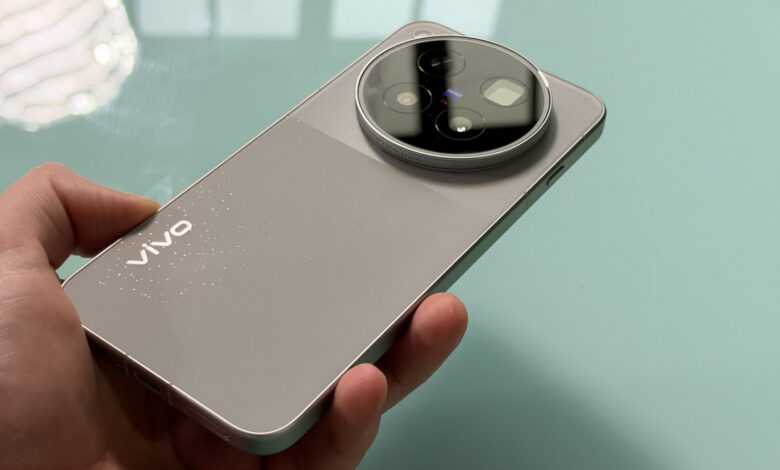
Vivo has expanded its camera-focused smartphone lineup with the introduction of the X500 Pro Max, a device heavily geared toward advanced mobile photography and professional-grade video production. The flagship phone introduces several significant hardware upgrades, led by a 50-megapixel Sony Lytia 1/1.28-inch main sensor featuring an f/1.6 aperture. Powered by LOFIC technology, the sensor is designed to deliver 17 stops of dynamic range by adding extra capacitors to each pixel to capture and store overflow light charge.
Complementing the main camera is a 50-megapixel ultra-wide camera utilizing a 1/1.75-inch sensor and a higher-resolution 200-megapixel 1/1.4-inch sensor dedicated to the telephoto lens, enabling lossless zoom up to 10x magnification. The device also maintains compatibility with Vivo’s Gen 2 teleconverter lenses co-produced with Zeiss. The Gen 2 Telephoto Extender provides an additional 2.35x magnification, while the Gen 2 Ultra extender increases optical zoom capabilities by 4.7x, though utilizing these attachments requires a new compatible case and mounting plate.
Image stabilization is a major focus for the new model. The main sensor incorporates a three-degree gimbal-grade stabilization system, which physically compensates for hand movement and camera shake during action shots and handheld video recording. Meanwhile, the periscope telephoto camera features CIPA 7-rated optical image stabilization to optimize long zoom captures and low-light performance by mitigating micro-tremors.
In practical testing, the stabilization systems yield smooth, judder-free video footage comparable to results achieved with dedicated gimbals. Low-light video performance avoids the frequent pulsing pixel artifacts often seen when mobile cameras struggle with continuous autofocus. Powered by an upgraded processor compared to previous iterations, the X500 Pro Max supports 4K video recording at up to 240 frames per second, doubling the 120 fps cap found on the X300 Ultra.
For professional videographers, the inclusion of a Pro Video Mode allows users to apply custom look-up tables with real-time previews. Additionally, the phone’s native log format supports the Academy Color Encoding System workflow. However, the device notably lacks an open-gate recording option, and its professional camera interface features relatively tiny on-screen buttons and readouts across its 6.85-inch display.
In terms of photographic output, images captured by the X500 Pro Max tend to exhibit vibrant colors and elevated contrast. Aggressive highlight suppression can occasionally create a heavily processed aesthetic that resembles digital editing. Furthermore, computational photography artifacts, particularly the distortion of text and facial features when using AI processing alongside telephoto attachments, remain present in certain shots.
Vivo’s LOFIC sensor approach differs structurally from competing technologies like Oppo’s DeepPix architecture, which redesigns internal pixel arrangements using Front Deep Trench Isolation to expand capacity physically. Despite the differing engineering routes, both sensor designs achieve a comparable 17 stops of dynamic range.