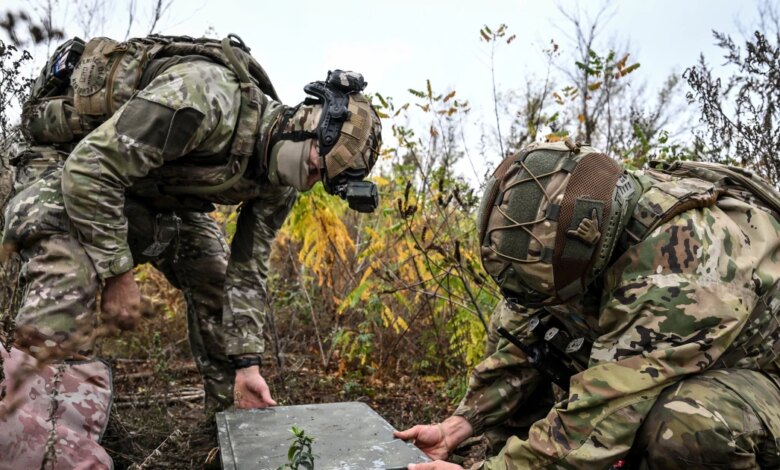
Ukrainian frontline forces are grappling with a critical loss of connectivity as disruptions to Starlink and Starshield services hamper drone operations and endanger soldiers during a period of intensified Russian offensive activity. The service interruptions, which have affected both reconnaissance and attack capabilities, are being described by field commanders as a significant blow to Ukraine’s tactical infrastructure.
In the Kharkiv region, a 31-year-old drone pilot identified by the call sign Dovbush detailed the life-or-death stakes of the connectivity issues. According to Dovbush, his unit utilizes Starlink Mini terminals mounted on vehicles to maintain communication while moving into position. The necessity of speed to avoid enemy detection and drone strikes creates a technical paradox: driving fast enough to escape Russian spotters causes the Starlink connection to drop.
“When we drive into a position, we have a Starlink Mini mounted on the vehicle, and we always try to get there as fast as possible, because if we drive slowly, the enemy will spot us and a drone will catch up with us,” Dovbush said. He noted that once the high-speed connection fails, the unit is forced to rely solely on radios, which are less effective for the data-heavy requirements of modern reconnaissance and target identification.
The impact extends beyond vehicle movements to the core of Ukraine’s aerial strategy. Flint, a drone unit commander, characterized the apparent withdrawal of U.S. support as a “knife in the back.” His unit relies on Starshield, a hardened version of the satellite service, to operate attack and reconnaissance drones targeting Russian troop concentrations, command posts, and armored vehicles.
Flint warned that if the Starshield restrictions persist, a significant portion of Ukraine’s drone fleet will remain grounded. For those that do take flight, the lack of a stable, high-speed link makes them easy targets for Russian forces. “They could practically be swatted out of the sky with a stick,” Flint said, emphasizing that the timing is particularly perilous as Russia continues offensive operations across multiple sectors of the front line.
The political dimension of the service outage reached the highest levels of government on Friday. Ukrainian President Volodymyr Zelenskyy confirmed that restrictions on the satellite service remained in effect. However, Zelenskyy indicated a potential resolution is near, stating that U.S. Secretary of State Marco Rubio had informed him that full service would likely be restored within 48 to 72 hours.
For soldiers like Dovbush and Flint, that window represents a dangerous gap in capabilities during an active conflict where the speed of communication often dictates the outcome of an engagement. Without an alternative as effective as the SpaceX-provided network, Ukrainian units remain reliant on a system that currently leaves them vulnerable in the field.