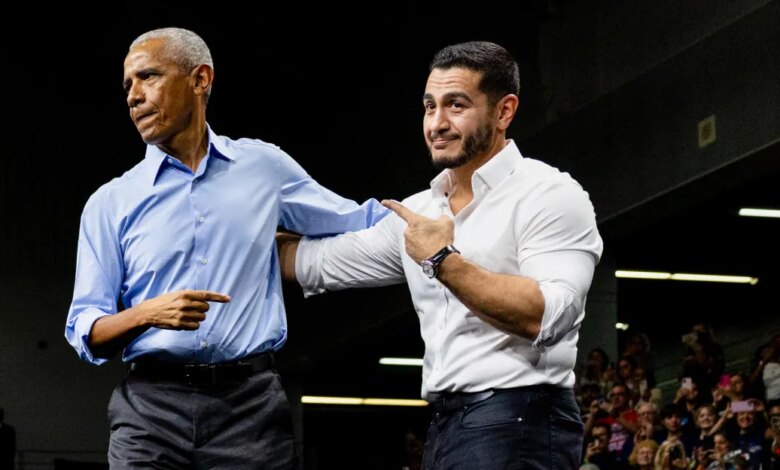
With just eight days remaining before the midterm elections, former President Donald Trump delivered an aggressive closing message at a campaign rally in Port Huron, Michigan, launching severe anti-Muslim attacks against Democratic Senate nominee Abdul El-Sayed. Speaking to supporters, Trump characterized the Michigan Democrat as a “jihadist” and asserted he “should never be allowed inside the halls of our great beautiful Capitol.”
“If Abdul and the Democrats win,” Trump told the crowd, “they will open the floodgates and invite hordes of jihadists to our shores, creating a nightmare of violence and terror until you cannot even have a Christmas.”
The remarks mark an escalation in an increasingly Islamophobic campaign strategy deployed by Republican figures in key midterm contests. Former Representative Mike Rogers, the Republican Senate nominee in Michigan, has previously sought to tie El-Sayed to the Muslim Brotherhood, while broader party messaging has incorporated similar attacks against Democrats nationwide.
Parallel rhetoric emerged elsewhere in Republican midterm campaigning. Texas Governor Greg Abbott appeared on television over the weekend to claim that his Democratic opponent, Gina Hinojosa, “supports Sharia law.” Earlier during the Republican midterm convention in September, Texas Senator Ted Cruz argued that “communism” and “Islamism” were forming an alliance against the GOP.
Trump’s final campaign itinerary features stops in Mississippi, Texas, Ohio, South Carolina, and Florida—traditionally safe Republican states where the party is nevertheless facing unexpectedly competitive Senate races in the closing days of the cycle. Political observers note that the heavy travel schedule across these regions suggests mounting anxiety over the party’s legislative prospects, particularly in Michigan, where El-Sayed currently leads in most recent polling.
Meanwhile, international elections over the weekend yielded distinct shifts abroad. Voters in Serbia and Brazil both rejected incumbent right-wing nationalist parties. Serbia unseated its long-standing leader, Aleksandar Vučić, while Brazilian President Luiz Inácio Lula da Silva secured a victory over Flávio Bolsonaro, a result carrying significant implications for environmental policy and the future preservation of the Amazon rainforest.