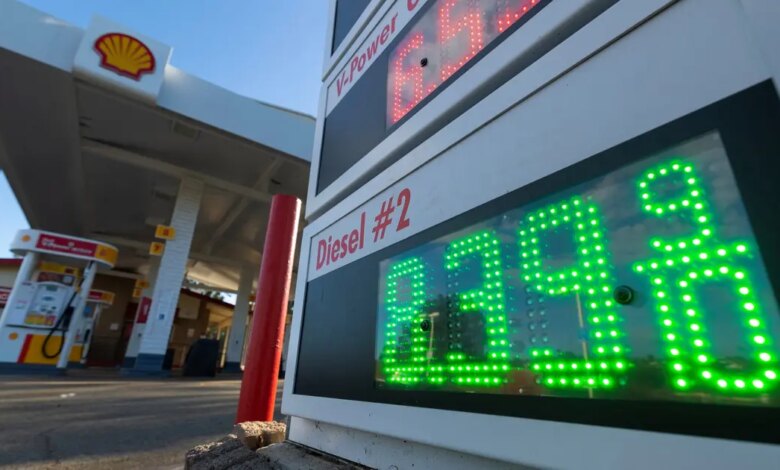
Oil prices climbed to a five-month high as energy markets reacted to persistent geopolitical pressures, leaving the administration with very few remaining policy levers to lower fuel costs for American consumers. Despite public assertions by President Donald Trump that Middle East oil exports have surpassed pre-war levels, market prices continue to rise, underscoring the severe constraints facing federal energy policymakers.
Over the course of the current economic pressures, the administration has implemented a series of emergency measures in an effort to cool the market. These actions include expanding access to red-dyed diesel, unlocking Russian diesel supplies, issuing waivers under the Jones Act, and authorizing releases from the U.S. Strategic Petroleum Reserve. However, these steps have thus far failed to produce a sustained downward trend at the pump.
Energy policy experts point out that the administration’s capacity to influence global oil supply at the margins has been severely restricted, particularly following earlier decisions to scale back investments in domestic clean energy initiatives. Heather Boushey, a former member of the Council of Economic Advisers under the Biden administration, noted that there are virtually no secondary measures left that could achieve significant relief. She stated that administration efforts are unlikely to move the needle sufficiently because they fail to address the fundamental underlying problem.
In response to mounting public and political concern over climbing fuel expenses, the White House defended its economic record while deflecting blame toward past governance and international conflicts. White House spokesperson Taylor Rogers attributed high gas prices to preexisting structural challenges, specifically citing Democratic policies that she argued led to the shuttering of domestic refineries, as well as the destruction of refining infrastructure resulting from the Russia-Ukraine war.
Rogers emphasized that the executive branch is actively pursuing long-term domestic solutions to address the supply bottleneck. She noted that the administration is taking tangible steps to increase refining capacity directly within the United States, even as short-term market volatility persists and external conflicts continue to dictate global petroleum pricing dynamics.