Michigan Senate Candidate Abdul El-Sayed Deflects Questions Over Past Ties in Heated Interview

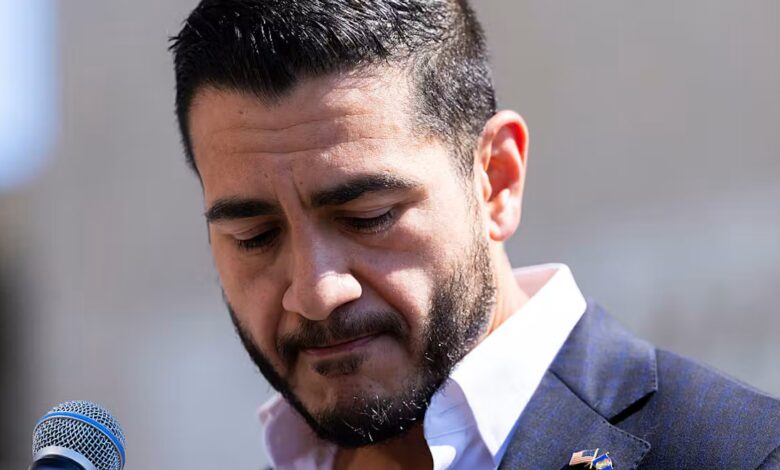
Michigan Democratic Senate nominee Abdul El-Sayed engaged in a tense television exchange when pressed about his past public statements and reported family ties to Egypt’s Muslim Brotherhood. During the interview, the discussion turned to criticism from his Republican opponent, Mike Rogers, regarding a 2012 letter that El-Sayed signed supporting the decisions of then-Egyptian President Mohamed Morsi, a Muslim Brotherhood leader.
Rather than directly addressing the document’s contents, El-Sayed interrupted the questioning to accuse the interviewer of challenging his patriotism and raising questions about dual loyalty. When the interviewer attempted to refocus the discussion on the 2012 statement, El-Sayed pushed back and urged the anchor to act as a journalist rather than echoing his opponent’s campaign themes.
El-Sayed explicitly denied ever being a member of the Muslim Brotherhood and stated that he is dedicated to serving the United States and upholding the constitutional oath required of senators. He argued that his political opponents were unfairly injecting his faith into the campaign, pointing out that the Constitution protects the religious freedoms of all Americans.
The underlying controversy centers on a 2012 letter published in Arabic on the Egyptian news website Al-Ahram Gate, which called on Morsi to swiftly purge the media and police while endorsing his political decisions. The document was initially brought to light by the Washington Free Beacon and subsequently examined by amid broader scrutiny of El-Sayed’s background. El-Sayed’s campaign has not publicly confirmed that the language in the letter signaled support for authoritarian practices.
Scrutiny has also focused on social media posts from El-Sayed’s maternal half-sister, University of Chicago professor Eman Abdelhadi, who referenced their family’s historical connection to the movement. In June 2012 posts, Abdelhadi explicitly described their family as having long-standing ties to the group and discussed their mother’s activist involvement during her college years in the 1970s. Additional reporting has examined his mother’s past employment with the Islamic American Relief Agency, a charity later designated by the federal government for supporting terrorist organizations and which ultimately pleaded guilty to sanctions violations. While El-Sayed’s mother faced no criminal charges in that case, the reported family history has intensified political debate.
The dispute has emerged as a central national security flashpoint in the Michigan Senate race. Rogers, a former House Intelligence Committee chairman, has contended that El-Sayed’s ideology and background render him unsuited for the Senate. Other Republican lawmakers, including Senators Ted Cruz and Tim Sheehy, have similarly expressed apprehension regarding potential access to classified information should El-Sayed win the seat.
El-Sayed’s campaign has dismissed the criticism as bad-faith attacks driven by political motives aimed at casting suspicion on a Muslim candidate. During the remainder of the interview, the discussion broadened to other policy areas, including inflation, foreign policy regarding Iran, Medicare for All, and election integrity. When questioned about a past remark concerning waiting times for medical procedures under a single-payer system, El-Sayed denied using the phrase, argued the quote was taken out of context, and defended Medicare for All as a solution to existing healthcare delays. He also defended his electoral outlook, pointing to ongoing coalition-building efforts despite competitive polling numbers.