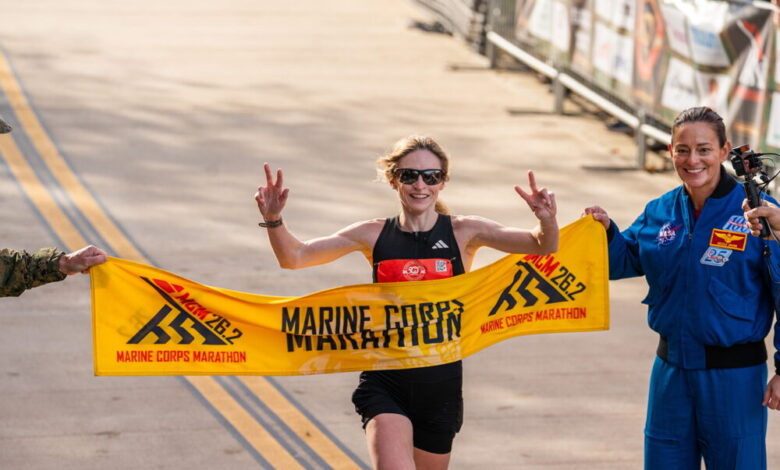
Runners across the region are entering their final preparation phase for the Marine Corps Marathon, with many participants tackling the grueling 26.2-mile distance for the first time. To help competitors navigate the final days before the starting gun, local back-to-back women’s division champion Tessa Barrett has shared her professional advice on how to optimize race-day performance.
According to the Arlington, Virginia, resident, the absolute priority in the days leading up to the race is comprehensive hydration. Barrett emphasizes that competitors should reach for more than plain water, incorporating sports drinks, electrolyte replacements, or products like Liquid I.V. to prepare their bodies for the physical strain.
With training largely complete by race week, athletes cannot build any additional fitness. Instead, resting the legs becomes paramount. Barrett advises runners to minimize unnecessary walking around Washington, D.C., when visiting the race expo at the National Building Museum, urging competitors to find moments to sit and relax whenever possible.
During periods of rest, increasing carbohydrate intake is essential for maximizing the body’s glycogen stores, which power the muscles over long distances. Barrett, who stands 5-foot-2 and weighs 100 pounds, targets 400 to 500 grams of carbohydrates daily during the final couple of days before a marathon. While she notes that consuming such a high volume of carbs can cause mild discomfort, she stresses that it makes a dramatic difference in sustaining energy on race day.
For runners who feel an absolute compulsion to maintain a running routine right before the event, Barrett recommends keeping any pre-race jogs short and low-effort, limiting them to 20 or 30 minutes. Securing adequate rest is another critical factor, particularly on the Friday night before the event. Because pre-race anxiety frequently disrupts sleep on Saturday night, banking solid rest early in the weekend is vital.
Nutrition and hydration protocols continue right up to the start of the race. Barrett, who describes herself as a veteran of trial and error regarding pre-race meals, emphasizes that eating something substantial before the starting signal is non-negotiable. She recommends eating breakfast at least two to three hours before the race begins, depending on individual digestive tolerance.
Once the race is underway, fueling must continue consistently rather than waiting for fatigue to set in. Barrett suggests consuming fluids and carbohydrates every 20 to 30 minutes, tailored to individual body size. Runners should start early at the 5-kilometer and 10-kilometer marks, and again at the halfway point. Waiting until mile 20 is a mistake, she warns, because energy gels take time to absorb into the system.
Course management requires patience, particularly during the opening miles. Barrett characterizes the Marine Corps Marathon course as fair—neither overly difficult nor exceptionally easy—noting that the most significant elevation changes occur during the first few miles. She advises runners to conserve their energy during this initial phase, adopting the mantra to run the first 20 miles and race the final 10 kilometers.
While structured plans provide a solid framework, Barrett reminds runners that race strategies often shift once sneakers hit the pavement, making flexibility and focus key to achieving personal goals. After crossing the finish line, the recovery process requires continued hydration and nourishment, which Barrett humorously caps off with a martini, noting that olives provide a dose of post-race electrolytes.