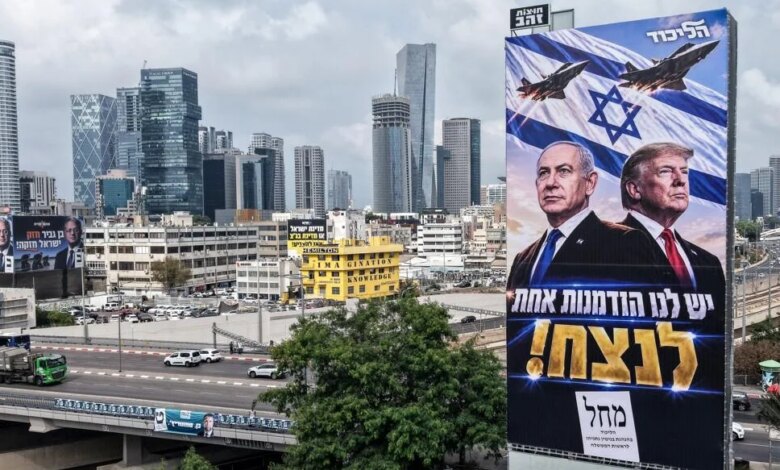
Tel Aviv — Israelis began casting ballots Tuesday in a hotly contested parliamentary election that carries no guarantee of a swift or definitive outcome for Prime Minister Benjamin Netanyahu or his political opponents. The vote is the first since the October 7, 2023, attacks by Hamas, an event acknowledged as the country’s most severe security failure since its founding in 1948. Voters head to the polls with the nation still engaged in a multi-front war across Gaza, Lebanon, and Syria, following two direct rounds of conflict with Iran.
Opinion polls heading into election day showed a razor-thin margin, with right-leaning pollsters indicating an advantage for the right-wing and religious bloc led by Netanyahu, while left-leaning surveys favored the opposing “change bloc.” Most polling suggests neither side will secure a decisive majority of the 120 seats in the Knesset, raising the possibility of a political stalemate, protracted cross-ideological negotiations, a minority government, or another round of elections.
Netanyahu, Israel’s longest-serving prime minister and head of the Likud party, is seeking to reconstruct a coalition relying on ultranationalist and Jewish religious allies. His campaign centers on two main arguments: that only he can govern without the support of Arab parties, which he contends pose a security risk, and that he requires more time to conclude ongoing military campaigns in Gaza, Lebanon, and Iran. Last week, President Trump endorsed Netanyahu, warning that the United States might not sustain the joint campaign against Iran if Netanyahu is unseated. Netanyahu subsequently leaned heavily on the security argument, posting an artificial intelligence-generated image of a mushroom cloud over Tel Aviv to emphasize the existential threat posed by Tehran.
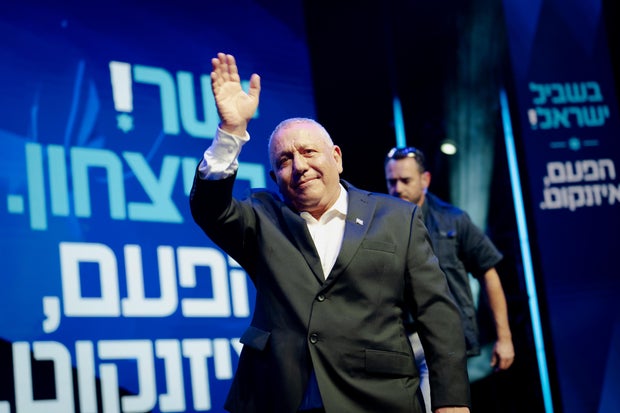
Opposing Netanyahu is the “change bloc,” a diverse coalition of Arab, right, left, and center parties united by their goal of removing the incumbent prime minister. The front-runner to lead this bloc is former military chief Gadi Eisenkot, leader of the centrist Yashar party. Eisenkot, who lost a son and two nephews serving in the military in Gaza and served on the war cabinet during the first year of the conflict, has framed himself as a unifying veteran. He has criticized Netanyahu’s rhetoric on Iran as fear-mongering and pledged to launch a state inquiry into the intelligence failures surrounding the October 7 attacks—an investigation Netanyahu has previously blocked.
Several wildcards could influence the final seat distribution, including voter turnout among Arab Israelis, who make up roughly 20 percent of the population. Past elections have shown significant variance in turnout among Arab voters and Netanyahu’s base, which could alter the electoral arithmetic. Furthermore, two newly formed parties are hovering near the electoral threshold required to enter the Knesset. Both groups have campaigned on challenging Netanyahu’s alliance with ultra-Orthodox parties by demanding that ultra-Orthodox Jewish citizens be subjected to mandatory military conscription, an issue that cuts directly through the incumbent coalition’s traditional base.
If neither bloc secures a 60-seat majority, several political pathways remain. Lawmakers could cross party lines and break campaign promises to form a coalition, a frequent occurrence in Israeli politics, or the change bloc could attempt to form a minority government relying on the tacit support or abstention of Arab parties. Alternatively, if politicians refuse to compromise, Israel could face a repeat of the electoral deadlock that produced five elections between 2019 and 2022.