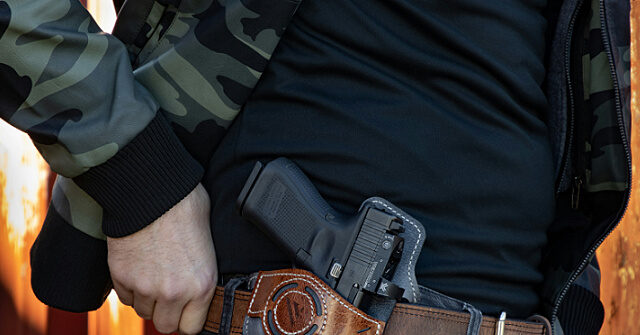
A new report by the Crime Prevention Research Center (CPRC) suggests that armed citizens play a significantly larger role in stopping active shooters than is officially acknowledged by federal law enforcement. The analysis, authored by CPRC president John Lott, asserts that armed civilians stopped 36.6 percent of active shooter incidents between 2014 and 2025. This figure represents a major departure from federal data, which estimated the intervention rate at just 3.9 percent for the same period.
The discrepancy stems from what Lott characterizes as the systematic misclassification and omission of relevant cases by federal authorities. During his tenure at the Department of Justice, where he was tasked with evaluating active-shooter reports, Lott identified numerous instances where armed civilians halted attacks that were either ignored or categorized incorrectly in official records. According to the report, federal datasets identified 418 active shooter incidents during the 11-year window, crediting armed citizens with stopping 16 of them. In contrast, the CPRC identified 615 incidents, finding that armed citizens intervened in 225 cases.
The timing of the report’s release follows a high-profile incident on October 15, 2026, at Silver Rail Elementary School in Oregon. In that event, an armed father was credited with stopping a gunman who had targeted the school. While some national news coverage described such outcomes as rare, the CPRC argues that the frequency of these interventions is obscured by flawed data collection. The report notes that news organizations often rely on the same federal databases that the CPRC is now challenging.
In addition to the 225 successful interventions identified in the primary data, the CPRC report noted another 35 cases that were excluded from the final percentage. These cases involved law-abiding armed citizens who successfully stopped potential attackers before a single shot could be fired. By focusing only on incidents where gunfire had already commenced, the report aims to provide a conservative baseline for citizen intervention while acknowledging that the total number of prevented tragedies may be even higher.
The findings emphasize a significant gap in how public safety data is recorded and reported. Lott’s research suggests that the presence of armed citizens in public spaces often serves as a decisive factor in the resolution of mass violence events, a reality he claims is underrepresented in official statistics and subsequent media narratives. The report calls for a re-evaluation of how active shooter events are defined and tracked to ensure that the role of defensive gun use is accurately reflected in national public safety discussions.